The Mobile Boardroom: How Acoustic Sanctuary Transfers Sharpen the US Executive Edge in Ho Chi Minh City
Step outside the doors of any five-star hotel in District 1 and the city greets you immediately — not with a handshake, but with a wall of sound. Motorbikes in their thousands, vendors calling across narrow lanes, construction cranes groaning above half-finished towers, and the persistent chorus of horns that Saigon treats as a second language. Ho Chi Minh City is alive in a way that few American cities can match, and that vitality is, under the right circumstances, genuinely exhilarating.
But not at 7:45 a.m., forty-five minutes before you are expected to present a nine-figure partnership proposal to a room full of Vietnamese executives who have been awake since five.
The Cognitive Cost of Urban Chaos
Research in environmental psychology has long established that sustained exposure to unpredictable, high-intensity noise degrades executive function — specifically the cognitive capacities most critical in business settings: working memory, attentional focus, and the ability to process complex information rapidly. A 2019 study published in the Journal of Environmental Psychology found that ambient noise above 65 decibels measurably impaired participants' ability to retain and organize new information. Ho Chi Minh City's major arterials routinely register between 75 and 90 decibels during peak hours.
For the US executive who steps off a fourteen-hour flight from Los Angeles or New York and immediately enters this sensory environment without a controlled buffer, the cognitive tax is real — and it arrives precisely when the cost is highest.
The interior of a properly appointed luxury limousine changes that equation entirely.
Silence as Strategy
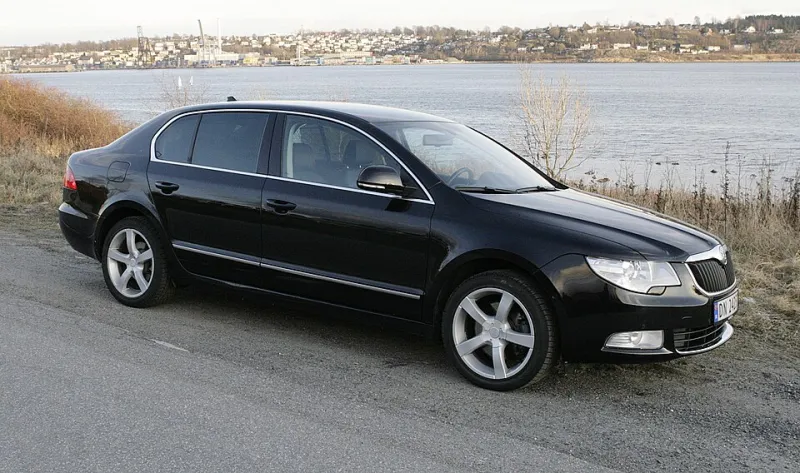
Premium vehicles deployed by elite ground transportation services in Ho Chi Minh City are engineered with acoustic dampening that reduces cabin noise to levels comparable to a well-appointed private office. Double-laminated glass, reinforced door seals, and sound-absorbing interior panels collectively create an environment that is not merely quiet by comparison — it is genuinely tranquil. The contrast with the street outside the tinted windows is so pronounced that first-time passengers frequently describe a sensation of unreality, as though the city has been muted entirely.
That sensation is, for the prepared executive, an invitation.
Consider the transfer from Tan Son Nhat International Airport to a meeting in the central business district — a journey that, depending on traffic, can consume anywhere from twenty minutes to over an hour. In a standard taxi or ride-share, that hour is largely lost: the driver may attempt conversation, the vehicle's air conditioning competes audibly with the engine, and the constant horn-induced flinching that accompanies any journey through Saigon traffic fragments concentration into useless fragments.
In a luxury limousine with a professionally trained, discreet driver, that same hour is recoverable. It becomes, in the hands of a disciplined executive, something resembling a private strategy session.
How Savvy US Travelers Actually Use Transfer Time
Expat business leaders with extensive experience operating in Vietnam have developed deliberate protocols around their ground transportation time. Several patterns emerge consistently.
The first is pre-meeting mental rehearsal. The controlled acoustic environment allows executives to run through talking points, anticipated objections, and opening gambits with a clarity that a hotel lobby — however grand — rarely affords. There are no interruptions. No colleagues appearing with last-minute questions. No phone calls that cannot be ignored. The vehicle becomes, functionally, a rehearsal room.
The second is post-meeting decompression and debrief. Vietnamese business culture is famously nuanced in its communication style. What was said in a meeting rarely tells the complete story; what was implied, deflected, or conspicuously omitted often carries equal or greater weight. The transfer back to the hotel after a tense negotiation provides an irreplaceable window to process these subtleties before they are overwritten by the next obligation. In the silence of a luxury cabin, executives can reconstruct the emotional arc of a meeting, identify the moments where the room shifted, and begin formulating their next move.
The third use is simply preparation through rest. Jet lag is not a minor inconvenience when your schedule spans fourteen time zones. The ability to close one's eyes for twenty minutes in a temperature-controlled, acoustically isolated environment — knowing that a professional driver is handling the chaos outside — has a measurable restorative effect. Executives who arrive at meetings rested, even briefly, simply perform better. This is not sentiment; it is physiology.
The Window as Metaphor
There is something philosophically apt about experiencing Ho Chi Minh City's famous street energy through tinted glass rather than immersed within it. The city's commercial districts are extraordinary to observe: the layered density of informal commerce, the architectural collision of French colonial facades and gleaming contemporary towers, the sheer human energy of a metropolis that has compressed decades of economic development into a single generation.
Viewing this from the quiet interior of a moving vehicle does not diminish the experience — it contextualizes it. The executive who arrives calm and prepared is also the executive who can be genuinely present in conversation, rather than arriving frazzled and spending the first twenty minutes of a meeting mentally catching up.
The city's energy, seen from that vantage point, becomes inspiring rather than overwhelming. It becomes evidence of the commercial dynamism that brought you here in the first place.
Choosing the Right Transfer Partner
Not every vehicle marketed as a luxury transfer delivers the acoustic and professional standards that make the difference described here. The relevant variables are specific: the vehicle's acoustic dampening rating, the driver's protocol around unsolicited conversation, the reliability of climate control, and the availability of in-cabin connectivity that allows work to continue uninterrupted.
For US executives operating in Ho Chi Minh City, the selection of a ground transportation partner deserves the same deliberate evaluation applied to hotel selection or meeting venue. The vehicle you travel in between your hotel and your counterpart's office is not a footnote to your business trip. It is, in the precise hours that matter most, your working environment.
In a city that never lowers its voice, the executive who controls their acoustic environment controls considerably more than that.