Choreographing the Deal: How Mastering Your Transit Transforms High-Stakes Negotiations in Saigon
Negotiation theory has long emphasized preparation, emotional intelligence, and the careful calibration of concessions. What it rarely addresses is the forty-five minutes before you enter the room — and in Ho Chi Minh City, those forty-five minutes can determine the outcome of everything that follows.
Saigon's streets are, by any objective measure, chaotic. Motorbikes weave between lanes in patterns that defy Western traffic logic. Intersections operate on an improvised choreography that bewilders first-time visitors. For the unprepared US executive arriving in a standard taxi or rideshare, this environment is a stress accelerant — cortisol rises, focus fragments, and the composed professional who boarded a flight in New York or Los Angeles arrives at a boardroom feeling frayed at the edges.
For executives who have arranged premium ground transportation, the calculus is entirely different.
The Controlled Environment as Competitive Infrastructure
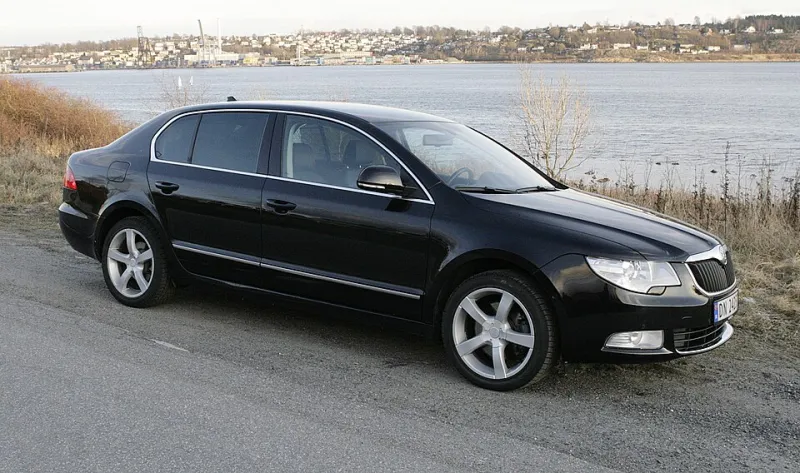
A luxury limousine transfer in Ho Chi Minh City is not merely a comfort upgrade. It is, functionally, a mobile preparation chamber. The acoustic insulation that muffles the city's ambient noise, the climate control that counters Vietnam's oppressive humidity, the secure Wi-Fi that keeps you connected to your team back home — each of these elements serves a specific strategic purpose.
Consider what a US executive actually needs in the final hour before a significant negotiation: quiet to review key terms, privacy to conduct a last-minute call with legal counsel, mental space to rehearse their opening position, and the physical composure that comes from not having wrestled with an unfamiliar city's transportation system. A well-appointed private vehicle delivers all four simultaneously.
In quieter markets — a mid-sized European city, a familiar domestic destination — executives can often replicate some of these conditions through a hotel lobby or a nearby café. Saigon offers no such easy alternatives. The city's energy is relentless. Its pace does not slow for the unprepared. This is not a criticism; it is simply the commercial reality of one of Southeast Asia's most dynamic economic centers. The executive who accounts for this reality gains an immediate advantage over the counterpart who does not.
Arrival Timing as a Negotiating Variable
Among the most underappreciated elements of negotiation preparation is the deliberate management of arrival time. Arriving too early signals eagerness. Arriving late — even by five minutes, in a culture where punctuality carries significant professional weight — can introduce a subtle but real power imbalance before introductions are complete.
A professional driver familiar with Ho Chi Minh City's traffic patterns — including the micro-level variations caused by school dismissal times, local market hours, and district-specific congestion — can calibrate departure times with a precision that no mapping application currently replicates. This is institutional, human knowledge, and it is available to executives who engage a service that employs experienced, locally embedded drivers.
The result is an arrival that is neither hurried nor premature — composed, deliberate, and on your terms.
The Intelligence Asset in the Front Seat
Saigon's business community is, in many respects, a village operating inside a metropolis. Relationships and reputations circulate through networks that are invisible to the outside observer but immediately legible to those embedded within them. A senior driver who has served the city's commercial district for years has often ferried executives from the very companies you are preparing to meet.
This is not an invitation to solicit gossip or breach professional discretion. It is, however, a recognition that a knowledgeable driver can offer contextual intelligence of genuine value: which venues a particular company favors for relationship-building dinners, which districts house their operational rather than their ceremonial offices, how the local business community regards a prospective partner's reputation. Framed appropriately, these conversations can provide texture and nuance that no due diligence report fully captures.
US executives accustomed to the transactional anonymity of domestic rideshare services may need to recalibrate their expectations. In Saigon, the driver is not background infrastructure. In the right service arrangement, the driver is a resource.
Psychological Composure and the Power Dynamic
Neuroscience research on decision-making under stress consistently demonstrates that elevated cortisol levels impair the prefrontal cortex functions most critical to negotiation: impulse control, long-term consequence evaluation, and the capacity to read social cues accurately. A stressful transit experience — navigating an unfamiliar city, managing language barriers, arriving in an overheated state — is a direct physiological disadvantage.
Conversely, a transit experience that is calm, controlled, and purposefully structured allows the executive to arrive in what performance coaches sometimes call a "ready state" — alert but not anxious, focused but not rigid. The private vehicle environment, particularly one that permits a brief period of silence or structured reflection before arrival, is a practical tool for achieving this state.
In a negotiation where both parties are professionally accomplished, the margin of advantage is often psychological rather than informational. Composure, in this context, is not a soft attribute. It is a tactical asset.
Venue Selection and the Full Journey Architecture
For US executives who are hosting rather than attending a meeting, the choice of venue — and the ground transportation arrangement for all parties — becomes an additional variable. Selecting a location that is straightforward for a local driver to navigate while presenting logistical complexity for an unaccompanied foreign counterpart subtly reinforces the host's positional authority.
More constructively, arranging transportation for visiting counterparts as a gesture of hospitality is a culturally resonant practice in Vietnam's business environment, where relationship investment signals seriousness of intent. An executive who ensures their guests arrive composed and well-oriented has already begun building the goodwill that smooths negotiation friction.
The Strategic Rider's Checklist
For US executives preparing for consequential meetings in Ho Chi Minh City, the following transit considerations merit deliberate attention:
- Departure timing: Confirm with your driver the precise window required to arrive five minutes before the meeting, accounting for current traffic conditions.
- Pre-meeting protocol: Use the first portion of the journey for final document review, the middle for a brief mental reset, and the final ten minutes for composed arrival preparation.
- Driver briefing: Communicate the nature and location of your meeting in advance. A prepared driver can anticipate route alternatives and provide relevant contextual information.
- Vehicle environment: Ensure climate control is set to a temperature conducive to alertness — typically cooler than comfort preference — and that noise insulation allows for quiet reflection or confidential calls.
- Post-meeting logistics: Arrange for your vehicle to be available immediately following the meeting. The minutes after a negotiation are often as strategically significant as those before it, and a private debrief environment is invaluable.
In Ho Chi Minh City, the deal is rarely won or lost in the conference room alone. The executives who understand this — and who arrange their ground transportation accordingly — arrive not merely on time, but ready.