The Conversation That Never Appears in the Minutes: What Gets Said in a Saigon Limousine and Why It Defines the Deal
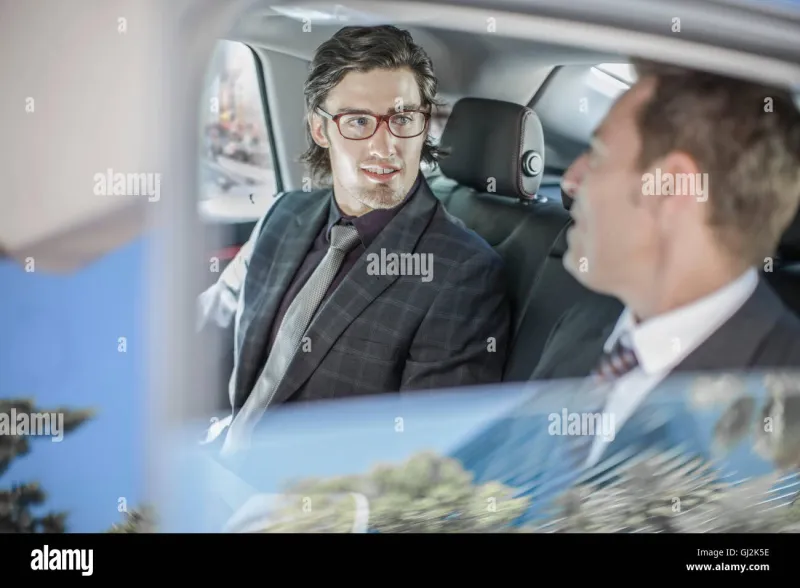
Photo: two business executives talking in luxury car backseat city night view, via c8.alamy.com
Every experienced negotiator knows the phenomenon, even if they have never named it. The formal meeting concludes. The presentations are done, the counteroffers have been exchanged, and both sides have retreated behind their respective positions. Then someone suggests sharing a car to the next venue, or the dinner reservation, or the airport. And somewhere in the middle of Ho Chi Minh City's traffic—unhurried, unrecorded, unstructured—the deal actually moves.
This is not coincidence. It is a function of how human beings communicate, and it has profound implications for how you think about your limousine as a business asset.
The Paradox of Formal Settings
Formal meetings are, by design, adversarial environments. Not adversarial in the combative sense, necessarily, but adversarial in the structural sense: each party has a role to perform, a position to defend, and an audience—their own team—whose expectations constrain what they can say and how they can say it. The conference room is a theater, and everyone on stage knows their lines.
This is useful for establishing terms, demonstrating competence, and signaling organizational priorities. It is less useful for discovering what your counterpart actually needs, what flexibility actually exists beneath their stated position, and what personal motivations are shaping their professional decisions. That information lives in the unguarded moments—and the limousine, more than almost any other environment in a business trip, is where unguarded moments tend to occur.
Why the Vehicle Creates a Different Kind of Space
The psychology of shared transit is distinctive. You are neither in your counterpart's territory nor in yours. The setting is neutral, temporary, and structurally informal. There is no agenda, no whiteboard, no assistant taking notes. The physical arrangement—seated side by side or at a slight angle, watching the same cityscape pass—is collaborative rather than confrontational in a way that facing each other across a table simply is not.
In Ho Chi Minh City specifically, the transit environment carries additional weight. The city outside the window is alive in ways that command occasional attention—the motorbike density, the street-level commerce, the particular energy of a metropolis in accelerated development. These shared observations become natural conversation anchors, and natural conversation is where authentic communication begins.
When authentic communication begins, the formal performance relaxes. And when the formal performance relaxes, people say what they mean.
What Gets Said When the Performance Relaxes
In transit, executives reveal priorities they would never state at the table. A comment about the timeline—we really need this resolved before the board meeting in Q3—tells you something about internal pressures that no formal presentation would disclose. An observation about a competitor—we've had some difficult experiences with that approach before—illuminates risk sensitivities that explain positions that seemed arbitrary in the meeting room.
These disclosures are rarely strategic. They are the natural output of a human being who has been performing for several hours and has momentarily stepped off the stage. The limousine provides the stage exit. What you do with the information you receive there is, of course, a matter of your own professional judgment and ethics. But receiving it—being present and attentive enough to hear it—requires being in the right environment.
A ride-sharing vehicle with a distracted driver, an uncomfortable cabin, and ambient noise from the street does not create that environment. A quiet, professionally managed luxury transfer does.
The Role of the Professional Chauffeur
There is a counterintuitive truth about the presence of a driver during these conversations: a skilled professional chauffeur does not interrupt the dynamic. They facilitate it.
This is partly a function of discretion—a quality that elite limousine services in Ho Chi Minh City train for explicitly. A professional chauffeur understands that their role during a passenger conversation is to be present without being intrusive: available for navigation and logistics, invisible to the interpersonal exchange happening in the cabin. They do not offer unsolicited commentary. They do not create noise. They manage the vehicle and the route so that the passengers can focus entirely on each other.
This is more than passive silence. It is active professional management of the environment. The chauffeur's expertise ensures that the conversation is never interrupted by a wrong turn, a communication breakdown, or a vehicle problem. The reliability of the service becomes the foundation on which the conversation can safely proceed.
The Danger of Forgetting That the Space Is Shared
The same dynamic that makes the limousine a productive environment for eliciting candor from your counterpart also applies to you. The relaxed informality of transit can lower your own guard in ways that are not always advantageous.
An executive who speaks freely in the back of a vehicle—making commitments that exceed their authority, revealing negotiating floor positions, or expressing frustration with their own organization—is not benefiting from the limousine's conversational atmosphere. They are being undone by it.
Elite ground transportation, properly understood, requires the same quality of professional driver discretion on both sides of the conversation. Knowing that your chauffeur is a trained professional who treats cabin conversations as confidential is not a minor comfort. It is a structural safety net that allows you to engage authentically without the anxiety that your candor will travel beyond the vehicle.
Between Venues, the Real Negotiation Continues
Saigon's most consequential business relationships are not built in conference rooms. They are built in the accumulated texture of interactions across an entire visit: the dinner, the car ride, the walk between venues, the moment when the agenda disappears and two people simply talk. The limousine is the controlled environment in which the most valuable of those interactions reliably occur.
For the American executive who treats ground transportation as a logistical afterthought, this represents a significant missed opportunity. The minutes between meetings are not dead time. They are, in many cases, the most productive time of the day—if the environment is right, the professional is skilled, and the executive is paying attention.
The vehicle that carries you through Ho Chi Minh City is not merely a means of getting from one place to another. It is, at its best, the room where the real conversation happens. Treat it accordingly.