Before You Speak a Word: How Your Arrival Vehicle Shapes the Psychology of Every High-Stakes Meeting in Saigon
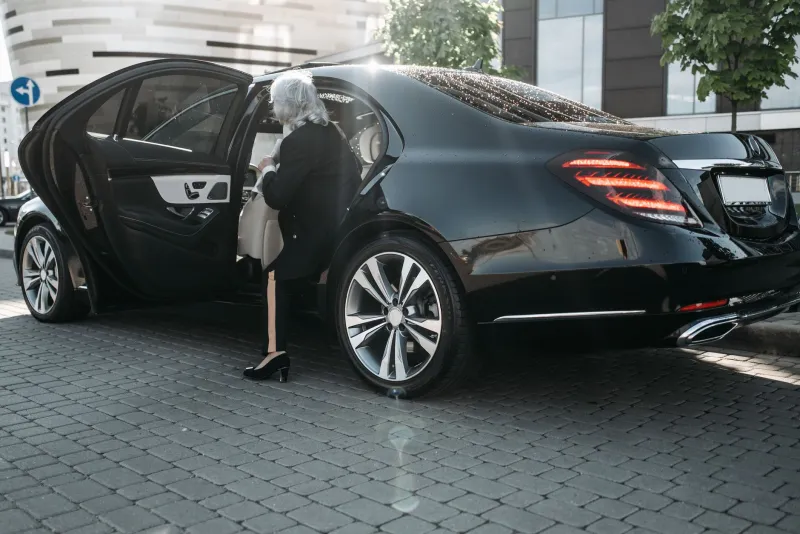
There is a moment — brief, almost imperceptible — that occurs before any significant business meeting in Ho Chi Minh City. It happens not inside the boardroom, but at the curb. It is the moment your vehicle pulls up, the door opens, and the assembled eyes of your counterparts, their assistants, and the building's staff quietly register what they see. In that instant, before a handshake is exchanged or a business card presented, a judgment has already been formed.
This is not conjecture. It is behavioral economics applied to one of Southeast Asia's most dynamic commercial capitals — and understanding it may be the most underutilized advantage available to American executives operating in Saigon today.
The Priming Effect and Its Business Implications
Behavioral economists have long documented the concept of priming: the phenomenon by which an initial stimulus shapes how subsequent information is interpreted. In a negotiation context, your arrival conditions the psychological frame through which your Vietnamese counterparts will evaluate everything that follows — your proposals, your pricing, your credibility.
Arriving in a well-appointed, chauffeured limousine does not merely suggest affluence. It signals organizational competence. It communicates that you operate within systems of precision and care. To a Vietnamese business executive, who has likely cultivated relationships with international partners across decades of rapid economic development, these signals are not superficial. They are data points in an ongoing assessment of whether you are the kind of partner worth trusting with serious capital.
Conversely, arriving disheveled after navigating an unfamiliar ride-share app through Saigon's notoriously complex traffic — late, flustered, and visibly off-balance — primes your counterparts to perceive you as someone who has not prepared adequately. And in Vietnamese corporate culture, preparation is a form of respect.
Cross-Cultural Dimensions of Status Signaling in Vietnamese Business
American executives are sometimes surprised to discover how explicitly status is acknowledged in Vietnamese professional settings. In the United States, there is a cultural mythology that celebrates the self-made disruptor who arrives in jeans and challenges convention. That mythology has limited currency in Ho Chi Minh City's established business corridors.
Vietnamese corporate culture places considerable weight on what might be translated as thể diện — a concept encompassing face, reputation, and social standing. It operates bidirectionally: your status reflects on your organization, and your organization's status reflects on the partners who align with you. When you arrive in a vehicle that signals deliberate investment in your own presentation, you are, in effect, extending a form of professional courtesy to your hosts. You are signaling that you regard this meeting as worthy of your full resources.
This is not about ostentation for its own sake. The distinction matters. A premium chauffeured vehicle in Saigon communicates discipline and intentionality — qualities that Vietnamese business culture holds in high regard. It says that you have thought carefully about this engagement, that you have arranged your logistics with the same rigor you presumably bring to your proposals.
The Confidence Compound: How Comfort Shapes Cognitive Performance
There is another dimension to this equation that operates entirely within you, independent of external perception. The quality of your transit directly influences your cognitive and emotional state when you walk through the door.
Consider the alternative: forty minutes in an unfamiliar vehicle, negotiating a language barrier with a driver whose GPS is routing you through construction zones, while your phone battery drains and the humidity outside fogs your jacket. By the time you arrive, you have already spent significant mental and emotional capital — reserves you needed for the meeting itself.
A professional chauffeured transfer eliminates this friction entirely. Your driver knows the city. The vehicle is climate-controlled. You have space to review your notes, collect your thoughts, and arrive in the composed, focused state that complex negotiations demand. Behavioral research consistently demonstrates that individuals who enter high-stakes conversations from a position of physical comfort and reduced cortisol perform measurably better — they listen more attentively, respond more strategically, and project greater authority.
In short, the vehicle is not merely a conveyance. It is a preparation chamber.
Reading the Room Before You Enter It
Experienced chauffeurs operating in Ho Chi Minh City's executive transportation sector carry a form of intelligence that is genuinely difficult to replicate. They understand traffic patterns that no app has mapped. They know which building entrances are used by senior executives versus support staff. They are attuned to the rhythms of Saigon's business districts — District 1's financial corridors, the emerging hubs of Thu Duc, the quiet power concentrated in certain riverside addresses.
This local knowledge has practical value that extends beyond punctuality. When your driver navigates you to the correct entrance, at the correct time, with the appropriate discretion, you arrive not merely on schedule but contextually correct. You have not inadvertently used the service entrance. You have not walked through a lobby that signals unfamiliarity with the building's protocols. These details, invisible to the uninitiated, are noticed by the people you are meeting.
The Economics of Perception
For US executives accustomed to evaluating every expenditure through a return-on-investment lens, the calculus here is straightforward. The cost of a premium chauffeured transfer in Ho Chi Minh City is, relative to the value of the transactions being negotiated, genuinely negligible. Yet its influence on the conditions under which those negotiations occur — the psychological priming of your counterparts, your own cognitive readiness, the local intelligence your driver provides — is disproportionately significant.
Investment bankers, legal teams, and management consultants operating in Vietnam's foreign direct investment space have long understood this. The executives who consistently close in Saigon are not necessarily the ones with the most sophisticated proposals. They are, frequently, the ones who have mastered every dimension of the impression they make — including, and sometimes especially, the moment of arrival.
Elevating the Standard of Your Saigon Engagement
At Saigon Elite Rides, we work with American executives who understand that their ground transportation is not a line item to be minimized — it is a strategic asset to be deployed with the same care they bring to every other element of their Saigon engagement. Our fleet, our drivers, and our commitment to precision logistics exist to ensure that when you arrive at your next meeting in Ho Chi Minh City, the conversation begins — quietly, powerfully — before you say a word.
In a city where relationships are the architecture of commerce, confidence is a currency. And how you arrive is, quite literally, your opening bid.