On Time or Out of the Deal: Why Punctuality Is the Ultimate Power Move in Ho Chi Minh City
There is an old axiom in American business culture: being early is on time, being on time is late, and being late is unacceptable. Nowhere does that principle carry greater financial consequence than in Ho Chi Minh City, where the gap between a punctual arrival and a delayed one can quietly determine whether a negotiation ends in a handshake or a polite impasse.
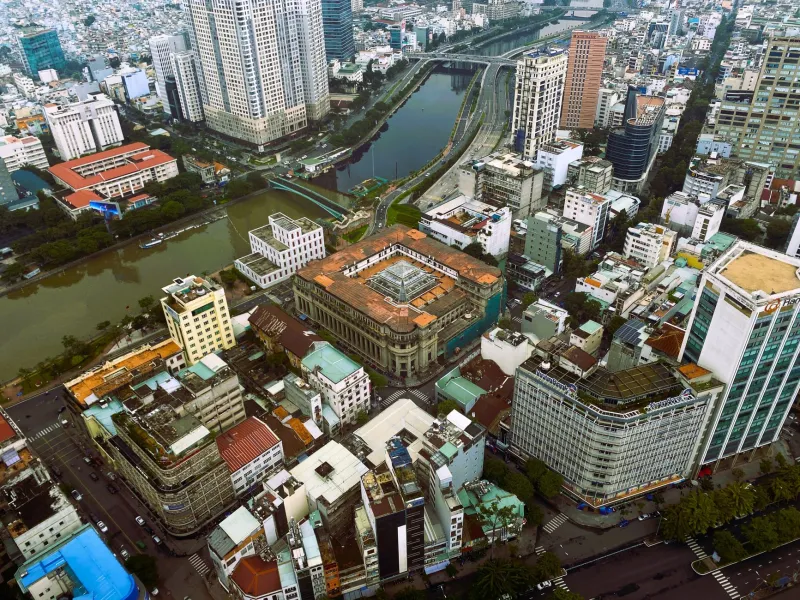
Saigon's streets do not forgive improvisation. What appears on a mapping application as a twelve-minute drive from District 1 to a boardroom in Thu Duc can, without warning, stretch into forty-five minutes of gridlock. For a US executive carrying the weight of a cross-Pacific deal, that half-hour deficit is not merely inconvenient — it is a reputational liability.
The Traffic Variable That No Spreadsheet Accounts For
Ho Chi Minh City is home to more than nine million registered motorcycles, and the daily choreography of its roads resists easy prediction. Rush hour does not observe a tidy schedule. A minor road incident near Nguyen Hue Boulevard can ripple outward across multiple districts within minutes. Construction corridors shift. Seasonal flooding during the wet months renders entire arterial routes temporarily impassable.
For the business traveler relying on a ride-hailing app or a hotel-arranged sedan, these variables are largely invisible until the moment they materialize — often at the worst possible time. The driver may be skilled; the vehicle may be adequate. But neither factor compensates for a routing strategy built on optimism rather than intelligence.
Elite limousine services operating in Saigon approach traffic as a dynamic data problem, not a static inconvenience. Experienced chauffeurs maintain working knowledge of congestion patterns across districts, monitor real-time road conditions, and build contingency routes into every itinerary as a matter of professional protocol. The result is a departure time calculated to absorb disruption, not merely accommodate it.
What a Late Arrival Actually Costs
The financial calculus of tardiness in high-stakes meetings is rarely captured in post-trip expense reports, but it is very real. Consider the sequence of events that unfolds when a US executive arrives fifteen minutes late to an introductory meeting with a Vietnamese manufacturing partner.
First, the Vietnamese counterpart — who has almost certainly arrived early — has spent those fifteen minutes recalibrating their impression of the incoming party. In Vietnamese business culture, punctuality signals respect for the relationship itself, not merely for the agenda. A late arrival, regardless of the explanation offered, introduces a subtle but persistent question: Is this the partner we want for the long term?
Second, the compressed meeting window that follows a late arrival forces both parties into an abbreviated version of a conversation that was designed to build rapport. The informal minutes at the beginning of a meeting — the exchange of pleasantries, the reading of the room, the unscripted moments that establish human connection — are precisely the minutes sacrificed when time is lost to traffic. What remains is transactional, and transactional meetings rarely produce the relational trust that Vietnamese business partnerships depend upon.
Third, the executive who arrives flustered, apologetic, and visibly rattled by the commute enters the room at a psychological disadvantage. The composed counterpart across the table has had time to settle, review notes, and establish their footing. The negotiating dynamic shifts before a single word of substance is spoken.
The Intelligence Behind Precision Timing
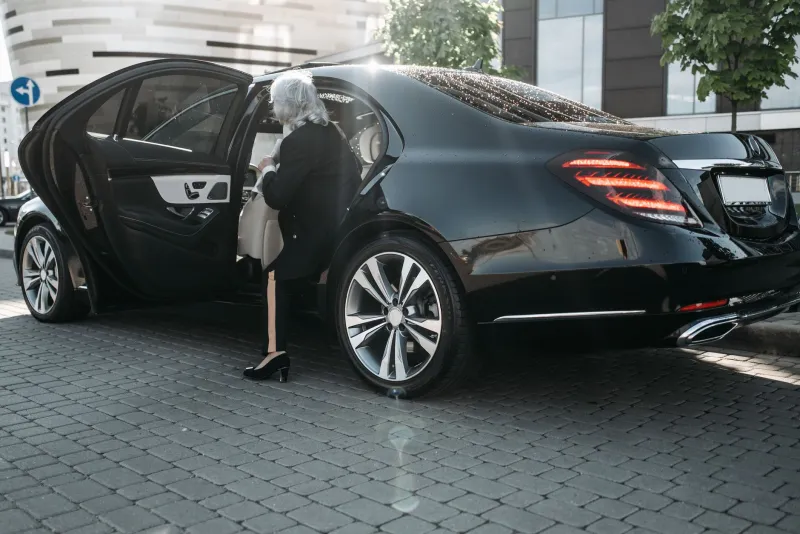
What separates a professional chauffeur service from a standard transportation arrangement is not primarily the vehicle — it is the operational intelligence embedded in every transfer. An experienced Saigon chauffeur understands which intersections near the airport back up during early morning arrivals, which routes through Binh Thanh District become unreliable after midday, and which back corridors in the central business district allow for consistent passage during peak hours.
This knowledge is not incidental. It is accumulated over years of navigating the city's rhythms, and it functions as a form of risk mitigation that no navigation algorithm can fully replicate. When an elite limousine service schedules a pickup, the departure time is not selected arbitrarily — it is engineered to place the passenger in the lobby of their destination with time to compose themselves, review their materials, and arrive at the meeting table as the version of themselves they intended to present.
For US executives accustomed to the relative predictability of American metropolitan traffic systems, this level of logistical precision may initially seem excessive. It is not. It is the appropriate response to an environment where the margin for error is narrower than most travelers anticipate.
Punctuality as a Proxy for Professionalism
In Saigon's corporate circles, the manner in which a foreign executive manages their arrival logistics is observed and interpreted. A partner who consistently arrives on schedule, unhurried and prepared, signals something that no business card or LinkedIn credential can communicate as efficiently: operational competence.
This is the silent currency of punctuality. It does not appear in any contract clause or term sheet. It is not discussed openly across the negotiating table. But it accumulates quietly in the minds of local counterparts, shaping their assessment of whether the person sitting across from them is someone who manages complexity with discipline or someone who leaves critical details to chance.
For the American executive making multiple trips to Ho Chi Minh City across the lifecycle of a business relationship, this perception compounds. The partner who arrives reliably, meeting after meeting, establishes a reputation that precedes them. The partner who arrives late, even once, with a story about unexpected traffic, introduces a doubt that is difficult to fully erase.
Reframing Ground Transportation as Risk Management
The most effective shift in perspective for US business travelers approaching a Saigon itinerary is to stop categorizing ground transportation as a comfort expenditure and begin treating it as a risk management instrument.
The cost of a premium limousine transfer, measured against the potential value of the meeting it is designed to support, is almost always negligible. The cost of arriving late to that same meeting — in eroded trust, compressed negotiating time, and compromised first impressions — is rarely negligible, and is frequently irreversible.
Elite ground transportation in Ho Chi Minh City does not simply move passengers from one point to another. It manages the variables that stand between a US executive and the version of themselves they need to be when the meeting begins. In a city where traffic is a constant and unpredictability is the only reliable forecast, that management is not a luxury. It is the most rational investment a business traveler can make before the conversation even starts.