How the Car You Arrive In Becomes the Story Saigon's Business Community Tells About You
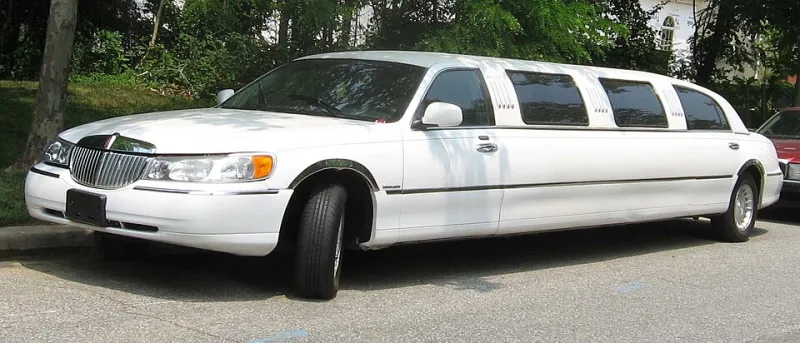
Photo: IFCAR, Public domain, via Wikimedia Commons
There is a particular kind of currency that circulates through Ho Chi Minh City's business elite—one that cannot be deposited in a bank account or itemized on a balance sheet. It is reputation currency, and it accumulates or erodes with every decision you make, including the ones you consider purely logistical. Among those decisions, few are observed more carefully—or discussed more quietly—than how you choose to move through the city.
For American executives arriving in Saigon for the first time, this dynamic can be genuinely surprising. Back home, ground transportation is often treated as a commodity: functional, interchangeable, and invisible to everyone except the person using it. In Ho Chi Minh City, that assumption is a liability.
A City That Watches How You Arrive
Ho Chi Minh City's upper-tier business community is smaller and more interconnected than its population of nine million might suggest. The senior partners at the major law firms know the managing directors at the investment banks. The founders of the city's most prominent family conglomerates attend the same charity galas as the representatives from multinational headquarters in Singapore and Hong Kong. Information—including observations about visiting executives—moves through this network with remarkable speed.
This is not gossip culture in the pejorative sense. It is, rather, the natural function of a business community that relies heavily on trust signals to evaluate potential partners. In a market where formal due diligence has its limits and personal relationships carry outsized weight, the visible choices of an incoming executive become data points. The vehicle parked outside the meeting venue is one of those data points.
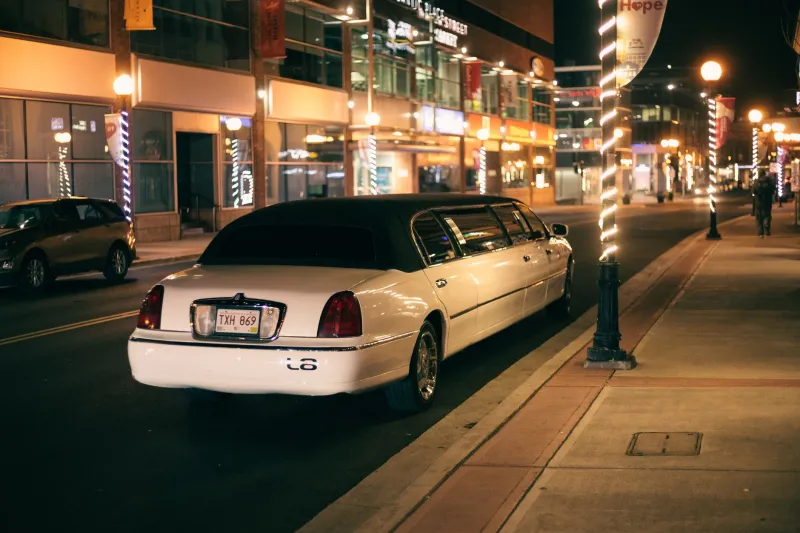
A limousine from a recognized elite service signals preparation. It communicates that the executive understood the context well enough to match their arrival to the environment. A ride-sharing app, by contrast, signals improvisation—or worse, indifference to the local professional culture.
The Observation Happens Before You Walk Through the Door
Consider the mechanics of a typical high-stakes meeting in Saigon. Your counterpart—or their assistant, their associate, a colleague passing through the lobby—sees the vehicle that delivers you. They note the model, the condition, and the composure with which you step out. This observation takes approximately four seconds. Its effects can last four months.
This is not hyperbole. Senior executives who regularly host foreign counterparts in Ho Chi Minh City will confirm that arrival presentation is part of their informal assessment framework. It is not the only factor, and in isolation it will not close or kill a deal. But it contributes to a cumulative impression that either reinforces or undermines everything you communicate once you are inside the room.
Elite ground transportation signals three things simultaneously: that you respect the meeting enough to prepare thoroughly, that you understand the local professional culture, and that your organization operates at a level consistent with the partnership being discussed. Strip away the vehicle, and you strip away those signals—leaving your words to do work they were never designed to do alone.
The Network Effect: How Your Transportation Choice Travels
In American corporate culture, we tend to think of reputation as something built through deliverables, presentations, and relationship development over time. In Ho Chi Minh City's business circles, reputation also accretes through observation—and those observations are shared.
A senior Vietnamese executive who watches a foreign counterpart arrive in a premium limousine may mention it to a colleague that evening, not as flattery, but as a contextual detail: The team from Chicago arrived properly. They understand how things work here. That comment, casual as it sounds, carries weight. It positions you as someone worth taking seriously before the substantive conversation has even begun.
The inverse is equally true. An arrival that feels careless—a cramped sedan, a confused driver, a last-minute scramble at the curb—becomes a story too. Not necessarily a damning one, but an unflattering one. And in a network where introductions matter enormously, unflattering stories have a way of arriving at your next meeting before you do.
Consistency Compounds the Signal
One arrival in a luxury vehicle is a data point. Consistent arrivals across multiple meetings, multiple days, and multiple venues become a pattern—and patterns build reputations. Executives who engage elite ground transportation throughout their time in Ho Chi Minh City are not simply making a comfort choice. They are making a sustained investment in how the local business community perceives their organization's standards.
This consistency also communicates something subtler: discipline. An executive who maintains professional presentation even in the logistical details—the parts of the trip that no one is technically required to get right—signals that their organization sweats the details everywhere. In a market where execution reliability is a premium attribute, that signal carries real commercial value.
What Elite Service Providers Understand That Apps Do Not
There is a meaningful distinction between transportation as a utility and transportation as a professional service. Ride-sharing platforms optimize for price and availability. Elite limousine services in Ho Chi Minh City optimize for something else entirely: the experience of the passenger, the impression of the arrival, and the discretion of the interaction.
A professional chauffeur with deep familiarity with the city's business venues knows where to position the vehicle for the most composed exit. They understand the timing required to ensure you step out looking unhurried and prepared, not flustered and apologetic. These are not small things. In a culture that prizes composure and face, the ability to arrive with visible ease is part of the professional performance.
The Calculation Is Simpler Than It Appears
For the American executive evaluating the cost of elite ground transportation against a ride-sharing alternative, the arithmetic seems straightforward. But the true calculation includes variables that do not appear on a receipt: the deal that moved forward because your counterpart perceived you as a serious partner, the introduction that was made because someone in the network vouched for your professionalism, the follow-up meeting that was scheduled because the first impression held.
Reputation currency in Saigon's business circles is earned slowly and spent quickly. Your ground transportation choice is one of the most controllable variables in that equation. Use it accordingly.