Command the Conference Circuit: How Flawless Ground Transportation Gives Executives the Edge on Saigon's Most Demanding Event Days
The calendar looks manageable enough on paper. A morning keynote at a convention center in District 1. A working lunch across the river in Thu Duc. An afternoon breakout session back in the central business district. A cocktail reception at a rooftop venue by 6:30 p.m., followed by a private client dinner at 8:00. In aggregate, it reads like a full and productive day. In practice, for the executive who hasn't secured reliable ground transportation, it reads like a logistical obstacle course designed to exhaust you before the evening's most important conversations even begin.
Ho Chi Minh City's conference and trade event scene has grown substantially in recent years. International business forums, regional summits, and sector-specific conventions now draw delegations from across Asia, Europe, and North America with increasing regularity. The city's infrastructure has matured to accommodate these gatherings — but the streets between venues remain what they have always been: dense, unpredictable, and unforgiving to anyone whose transit strategy depends on chance.
For the US executive operating on a compressed itinerary, the difference between a productive multi-venue conference day and a scattered one is rarely about the quality of the sessions attended. It is almost always about what happens in between them.
The Hidden Cost of Logistical Uncertainty
Consider what it actually costs to improvise transportation between conference stops. You step out of a morning session with fifteen minutes before your next commitment across the city. You reach for a ride-sharing app and discover surge pricing, limited availability, or a driver who requires you to navigate the pickup location through a crowded lobby and an unfamiliar street-level drop-off zone. By the time you're seated and moving, you've spent cognitive energy you cannot recover — energy that was supposed to be directed toward the conversation waiting for you at the next stop.
This is not a minor inconvenience. In a business environment where your ability to project composure, recall details from earlier discussions, and read a room with precision can determine the trajectory of a negotiation, arriving mentally depleted is a material liability. The logistics of getting from Point A to Point B are supposed to be invisible. When they aren't, they cost you.
Elite ground transportation solves this problem not by making traffic disappear — no service can do that in Ho Chi Minh City — but by removing every other variable from the equation. Your vehicle is confirmed before you need it. Your driver knows the route, the likely congestion points, and the optimal approach to each venue's entrance. Your departure time is coordinated with your schedule, not negotiated in real time from a sidewalk.
The Interval as a Strategic Asset
What many executives underestimate is the value of the transit interval itself. The ride between a midday panel and an afternoon client meeting is not dead time. It is, in fact, one of the few genuinely private moments available in a day structured entirely around public performance.
Inside a well-appointed luxury vehicle — climate-controlled, acoustically insulated, staffed by a professional who understands that discretion is part of the service — you have the conditions necessary to decompress, recalibrate, and prepare. You can review notes from the morning's sessions without concern that a neighboring passenger is absorbing proprietary details. You can place a call to your team back in the US without managing the ambient noise of a hotel lobby. You can, if the schedule permits, simply close your eyes for ten minutes and arrive at the next engagement genuinely refreshed rather than performatively composed.
This is the architecture of a high-functioning conference day: not the elimination of fatigue, but the strategic management of recovery windows. Elite transit makes those windows usable.
Coordination at Scale
For executives traveling with colleagues or managing a delegation, the coordination dimension becomes even more consequential. A luxury ground transportation service operating at a professional level does not simply move one person from one place to another. It manages the sequencing of an entire group across a full day's schedule — accounting for staggered session end times, last-minute venue changes, and the inevitable guest who needs to be collected from a different hotel before the evening reception.
This kind of logistical orchestration requires a service provider who has invested in local knowledge, route intelligence, and communication infrastructure. It requires drivers who understand that their role extends beyond operating a vehicle — that they are, in effect, the connective tissue holding a complex itinerary together. And it requires a dispatch model that can respond to real-time adjustments without creating downstream chaos.
For the US executive accustomed to working with a premium car service at home, the expectation is not merely comfort. It is operational reliability at a level that makes the transportation layer of the day genuinely invisible — present when needed, unobtrusive when not, and never a source of anxiety.
Arriving Ready at Every Stop
There is a particular quality of presence that distinguishes the executive who has managed their day well from the one who has merely survived it. It shows in how they enter a room, how quickly they re-engage with a conversation that began hours earlier, and how effectively they shift register between the analytical demands of a breakout session and the relational demands of a networking dinner.
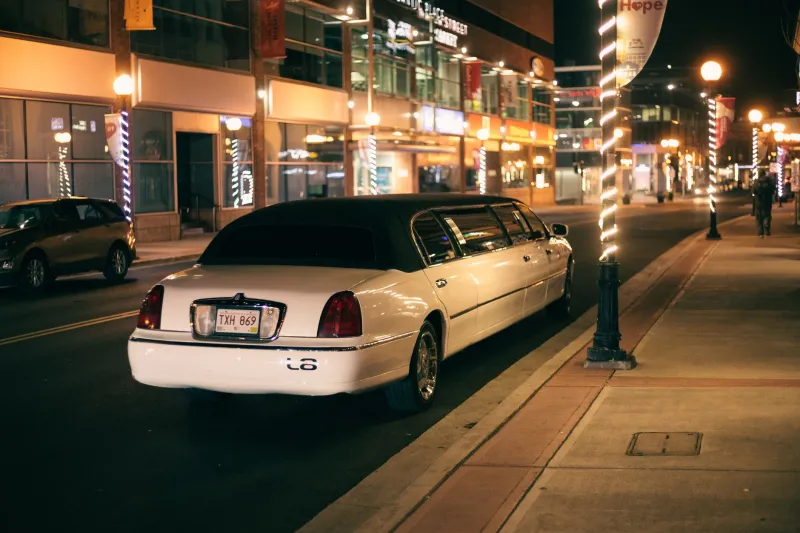
That quality is not purely a function of experience or temperament. It is, in significant part, a function of how well the structural conditions of the day have supported sustained performance. The executive who spent the afternoon in the back of a well-maintained limousine, reviewing their notes in silence and arriving at each venue on schedule, is not operating from the same baseline as the one who spent that same interval standing on a curb, refreshing an app, and rehearsing explanations for why they might be late.
In Ho Chi Minh City's conference environment, where relationships are built across multiple touchpoints in a single day and where the impression you make at a 7:00 p.m. reception can determine the outcome of a 9:00 a.m. meeting the following morning, the margin between those two executives is not trivial.
The Strategic Case, Simply Stated
Elite ground transportation on a multi-venue conference day in Ho Chi Minh City is not a luxury expenditure in the conventional sense of the term. It is an operational investment in the conditions that make high-stakes performance possible. It removes the variables that erode composure. It converts transit intervals into recovery and preparation time. It ensures that the version of you who walks into the final engagement of the day is recognizably the same as the one who walked into the first.
In a city that rewards the prepared and penalizes the improvised, that consistency is worth more than any single session on the conference agenda.