Precision in Motion: How Your Ground Transportation Strategy Shapes What Saigon's Business Elite Think of You Before You Shake Hands
There is a moment, brief and largely invisible to the untrained eye, that occurs before every significant business meeting in Ho Chi Minh City. It happens at the curb, in the lobby, or at the gate of a private venue — the moment your Vietnamese counterpart observes how you arrived. What they register in those few seconds is not your attire, your title, or your firm's reputation. It is the precision of your handoff.
In Saigon's corporate culture, time is not merely a scheduling variable. It is a form of currency, and the way you manage it — or fail to — is interpreted as a signal of your character, your organizational discipline, and ultimately, your reliability as a partner. American executives accustomed to the relatively forgiving transit infrastructure of major US cities often underestimate how radically different the calculus becomes in a city of nearly ten million people, where traffic moves according to its own logic and where the margin between punctual and late can collapse in minutes.
The Cultural Weight of the Seamless Arrival
Vietnamese business culture places considerable emphasis on preparation and respect for others' schedules. Arriving on time — truly on time, not within a five-minute window — is understood as a demonstration of seriousness. Arriving late, regardless of the explanation, registers as a form of disrespect, however unintentional. What is less commonly understood by foreign executives is that the manner of arrival carries nearly as much weight as the timing itself.
A seamless arrival — one in which the vehicle is precisely positioned, the transition from car to building entrance is unhurried, and the executive steps forward composed and prepared — communicates something that no verbal explanation can replicate. It signals that the logistics were mastered in advance, that nothing was left to chance, and that the person stepping out of that vehicle operates with the same level of control in their professional conduct.
Conversely, an arrival marked by a last-minute scramble for a ride, a vehicle circling the block, or an executive emerging disheveled and checking their phone communicates the opposite — regardless of how strong the subsequent presentation may be.
Why American Executives Misjudge the Handoff
The error most US business travelers make in Saigon is applying the same transit assumptions they rely on at home. In New York, Chicago, or Los Angeles, a ride-sharing application provides a functional, if imperfect, solution for point-to-point travel. The infrastructure, while imperfect, is familiar. The failure modes are predictable. Executives have learned to work around them.
Ho Chi Minh City operates on an entirely different set of variables. Traffic density during peak hours is not merely an inconvenience — it is a structural feature of the city that can add thirty to forty-five minutes to a journey that would otherwise take fifteen. Street naming conventions, construction detours, and the sheer volume of motorbikes create conditions that standard navigation applications handle poorly. A driver unfamiliar with the specific routing demands of a given district may not understand the fastest approach to a building's private entrance, or how to position the vehicle for a rapid, dignified departure.
The result is a handoff that fails — not catastrophically, but in the subtle, cumulative way that erodes confidence before a single word of negotiation has been spoken.
Engineering the Departure as Deliberately as the Arrival
Elite ground transportation strategy in Saigon is not solely about arriving well. It is equally about departing with the same precision. In back-to-back meeting schedules — a common reality for executives navigating multiple stakeholder conversations across the city — the quality of the transition between engagements directly affects the quality of the executive's presence in the next room.
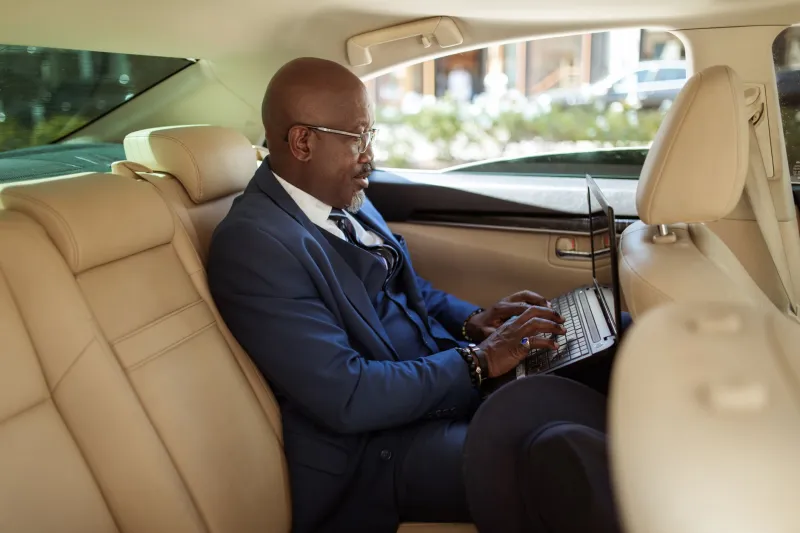
A vehicle that is staged and ready, a driver who has already anticipated the next destination's routing, and a cabin environment that allows for a genuine mental reset between conversations — these are not luxuries. They are operational assets. The executive who steps into the second meeting of the day having had eight minutes of composed, uninterrupted preparation time in a quiet, climate-controlled vehicle arrives with a measurably different quality of attention than one who spent those same eight minutes in a crowded taxi, managing a language barrier and watching the meter.
Your Vietnamese counterparts, many of whom are experienced in observing how foreign executives manage their schedules, notice this difference. They may not articulate it directly, but it informs their assessment of you as a partner.
The Strategic Value of a Known Quantity
One of the underappreciated advantages of working with a dedicated luxury ground transportation service in Ho Chi Minh City is the elimination of uncertainty. When your vehicle, your driver, and your routing are known quantities — confirmed in advance, coordinated with your schedule, and calibrated to the specific demands of each engagement — you remove an entire category of variables from your operational equation.
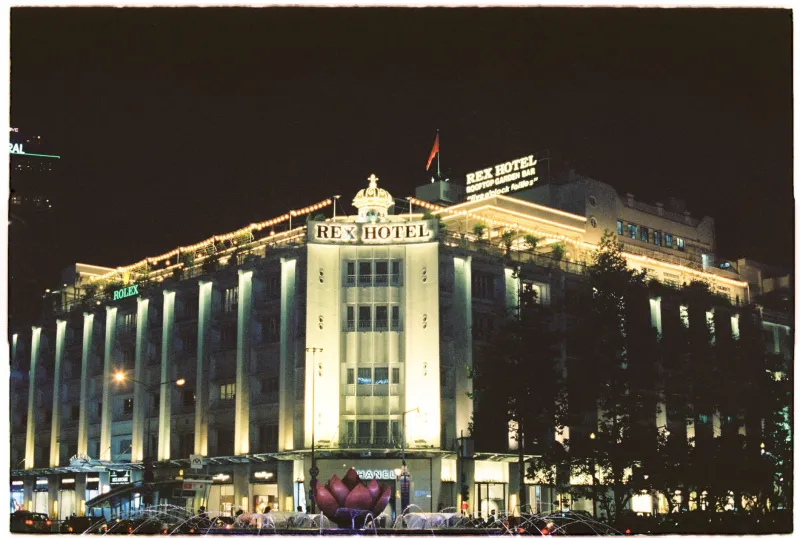
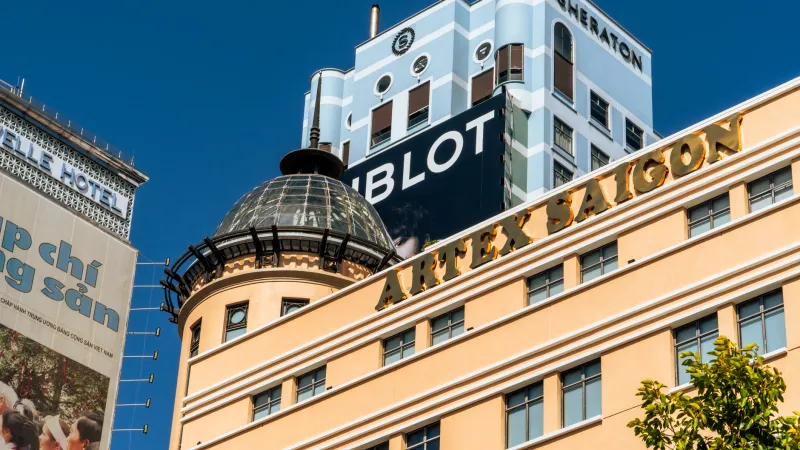
This matters in practical terms: your driver knows which entrance to use at the Caravelle, how to approach the Bitexco Financial Tower during peak hours, and how much buffer time is genuinely required between District 1 and District 7 on a Tuesday afternoon. But it also matters in strategic terms: you arrive at each meeting having invested your transit time in preparation rather than logistics management.
For American executives operating in a city where relationship capital is built slowly and eroded quickly, this is not a minor consideration. The first impression of operational competence — or its absence — is formed before any formal exchange occurs. Your ground transportation strategy is the opening move in every negotiation, whether you have treated it as such or not.
What the Handoff Actually Communicates
At its core, the handoff is a statement about how you value other people's time. In Saigon's business culture, where hierarchy, respect, and long-term relationship investment carry exceptional weight, this statement is received and interpreted with considerable care.
An executive who arrives precisely when expected, transitions smoothly from vehicle to venue, and departs without disruption or delay communicates a form of respect that transcends language and cultural difference. It says: I prepared for this. I took your schedule seriously. I am someone who operates with discipline.
That message, delivered before a single word is spoken, may be the most persuasive thing you say all day.
Saigon Elite Rides is designed specifically to ensure that this message is never left to chance. Our drivers, our vehicles, and our coordination protocols exist for one purpose: to make your handoff seamless, every time, across every engagement in Ho Chi Minh City.