The Interval Between: Why the Ride After the Meeting Is Where Your Next Move Gets Made
There is a particular kind of silence that descends in the moments after a negotiation concludes — not the silence of resolution, but of suspension. The room has emptied, the pleasantries have been exchanged, the elevator has descended. And now, somewhere between the lobby of a District 1 tower and the entrance of your next engagement across the city, you are left alone with everything that just happened.
For many executives, this interval is treated as dead time — a gap to be filled with email, phone calls, or the ambient noise of a ride-share app playing music no one selected. That is a significant strategic miscalculation. The post-meeting transit window is not dead time. It is, in fact, where the most consequential thinking of your business day takes place.
The Cognitive Science of Decompression
Neuroscience has long established that the human brain does not process complex information optimally in real time. During a high-pressure negotiation — the kind that fills the calendars of executives visiting Ho Chi Minh City — the prefrontal cortex is engaged in rapid-fire decision-making, reading social cues, filtering language, and managing emotional regulation simultaneously. It is a remarkable performance, but it comes at a cost.
The moments immediately following that performance are when the brain shifts into a different mode: consolidation. Psychologists sometimes refer to this as the "incubation phase" — a period during which the subconscious continues to work on problems the conscious mind has set down. It is during this phase that pattern recognition sharpens, that the detail you almost missed surfaces with sudden clarity, that the instinct you suppressed for diplomatic reasons finally gets a hearing.
What this means for the traveling executive is straightforward: the environment you occupy in the thirty to sixty minutes after a major meeting directly shapes the quality of your strategic thinking for everything that follows.
Why Ho Chi Minh City Makes This Harder — and More Important
Saigon does not offer the luxury of passive transit. The city's streets are among the most kinetically intense in Southeast Asia — a layered choreography of motorbikes, commercial vehicles, and pedestrian traffic that demands constant sensory engagement from anyone navigating them without insulation. In an ordinary vehicle, or in the open cabin of a ride-share, that environment intrudes. The noise, the stops, the unpredictability — all of it competes with the cognitive work your brain is attempting to do.
The compression of Saigon's business culture intensifies this challenge further. It is not uncommon for a visiting US executive to move through three or four substantive engagements in a single day, with each meeting carrying its own set of stakes, personalities, and unresolved threads. Without a meaningful decompression interval between them, those threads begin to tangle. Impressions bleed together. The nuance of a morning conversation contaminates the clarity required for an afternoon one.
Elite ground transportation addresses this directly — not through luxury as an aesthetic proposition, but through the creation of a controlled environment that makes genuine cognitive recovery possible.
What a Skilled Driver Actually Provides
The role of an experienced professional driver in this context extends well beyond navigation. A driver trained in the standards expected by discerning international clients understands, implicitly, that the passenger's silence is not an absence — it is an activity. The absence of conversation, of unnecessary questions, of ambient disruption, is itself a service.
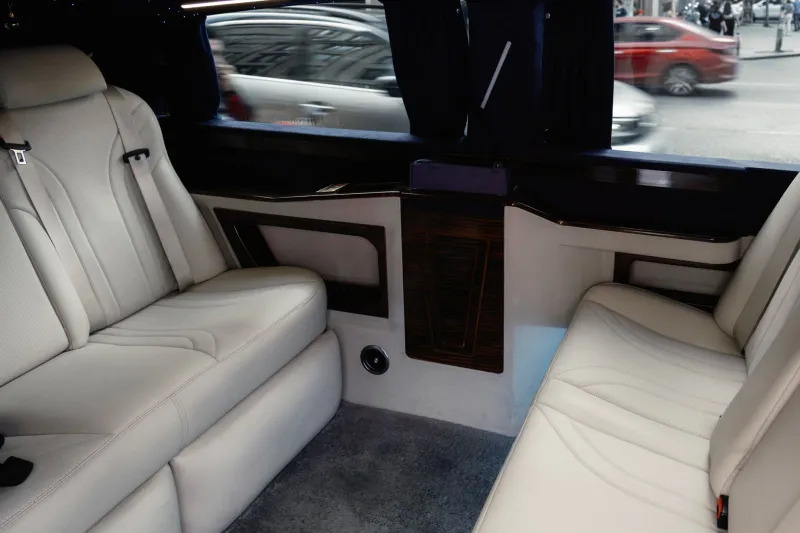
This is a subtler discipline than it appears. It requires reading a passenger's state upon entry — recognizing the particular quality of stillness that signals a need for complete quiet, versus the restless energy that might welcome a brief, grounding exchange about the route or the city. It requires calibrating the cabin environment — temperature, sound, the angle of privacy shading — without being asked. It requires, above all, a professional orientation that places the passenger's cognitive needs ahead of any impulse toward performance or conversation.
In Ho Chi Minh City's most capable limousine services, this orientation is not incidental. It is trained, reinforced, and treated as a core professional competency.
The Architecture of the Productive Interval
For executives who wish to use post-meeting transit time deliberately, rather than passively, a degree of intentional structure can be useful — though the structure itself should be light enough to preserve the incubation conditions the brain requires.
Many experienced business travelers find that the first five to ten minutes of a post-meeting transfer are best left entirely unstructured. No phone, no notes, no review of the agenda ahead. Simply the act of allowing the nervous system to downshift. In a well-appointed cabin — cool, quiet, insulated from the street — this happens faster than it would in almost any other environment available in a dense urban setting.
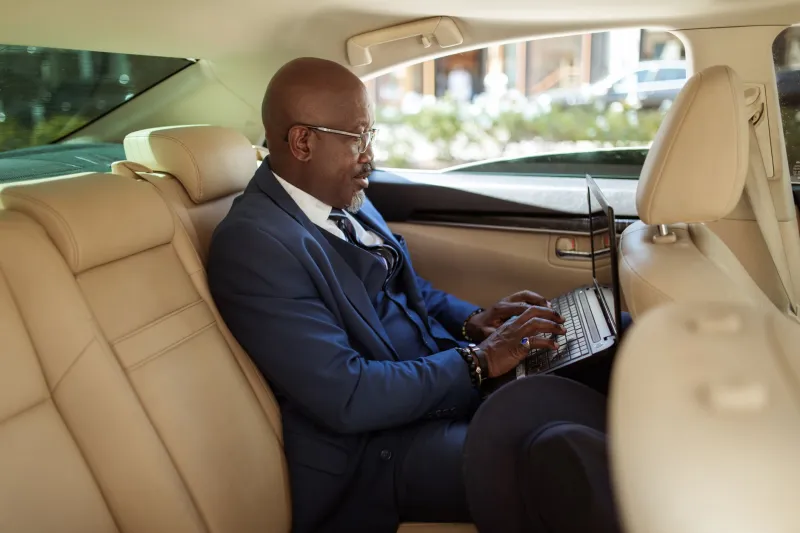
Following that initial interval, a brief and deliberate review of what just occurred can be remarkably productive. Not a comprehensive debrief, but a targeted exercise: What was the one moment in that meeting that carried the most weight? What did the other party's body language communicate that their words did not? What commitment, explicit or implied, now requires a response?
These questions, posed in the privacy of a moving vehicle with no audience and no social pressure, tend to yield cleaner answers than the same questions posed in a hotel lobby, a restaurant, or — worse — the next meeting room.
The Cost of Skipping This Step
The alternative is not neutral. Executives who move directly from one high-stakes engagement to another without a genuine decompression interval carry the residue of the previous meeting into the next one. That residue manifests in subtle but consequential ways: a slightly elevated defensiveness, a tendency to over-index on concerns that were relevant an hour ago but are not now, a diminished capacity to read the new room on its own terms.
In Saigon's corporate environment — where relationships are built on careful attunement and where the reading of interpersonal dynamics is often as important as the content of any proposal — arriving at a meeting carrying the emotional weight of the previous one is a liability that is difficult to quantify and easy to underestimate.
A Different Way to Think About Ground Transportation
The conventional framing of luxury ground transportation emphasizes comfort, status, and punctuality — all legitimate values, and all well served by a premium limousine service in Ho Chi Minh City. But for the executive who approaches their Saigon schedule with strategic seriousness, the more compelling proposition is cognitive.
The vehicle between your meetings is not a waiting room. It is a thinking room — one that moves through the city while you process, recalibrate, and prepare. The quality of that room, and the professionalism of the person at its helm, shapes the quality of every decision you make on the other side of the door.
In a city as dynamic and demanding as Ho Chi Minh City, that is not a minor consideration. It is, for many executives, the edge that makes the difference.