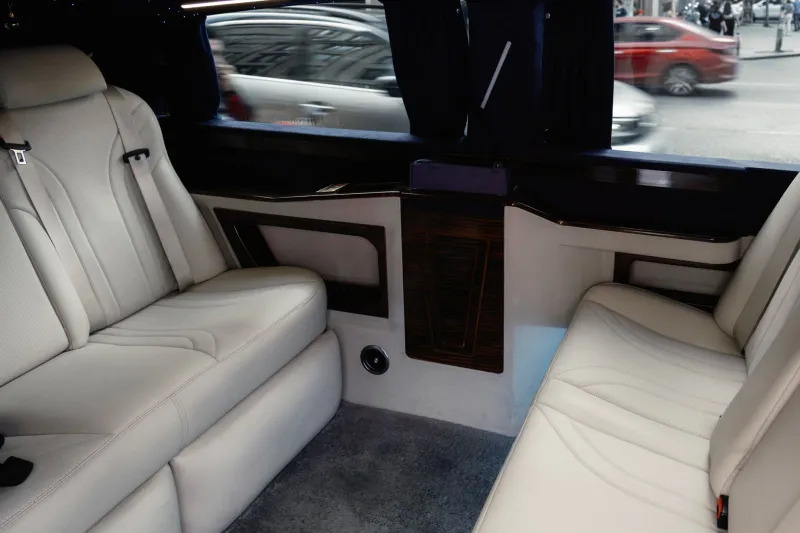
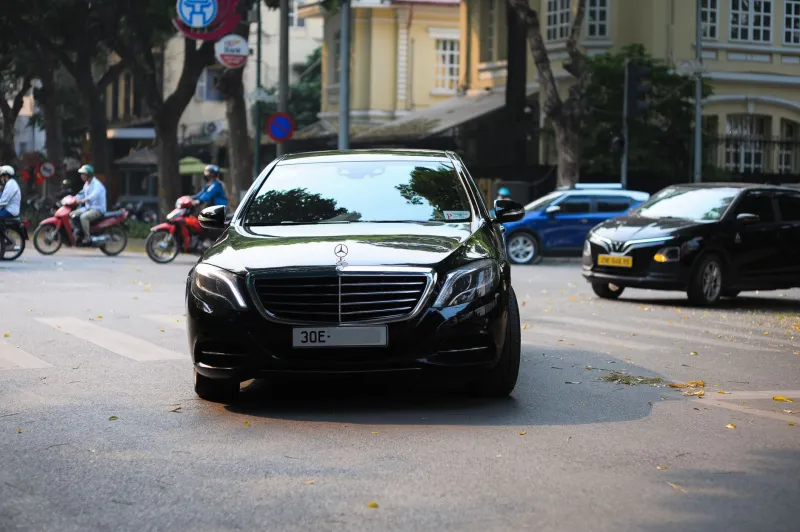
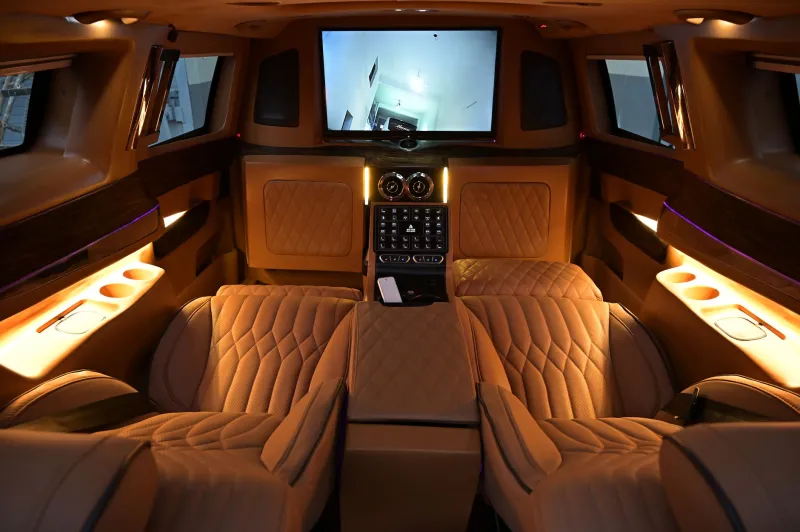
The Arrival Sequence: Engineering Your Entrance at Saigon's Most Consequential Venues
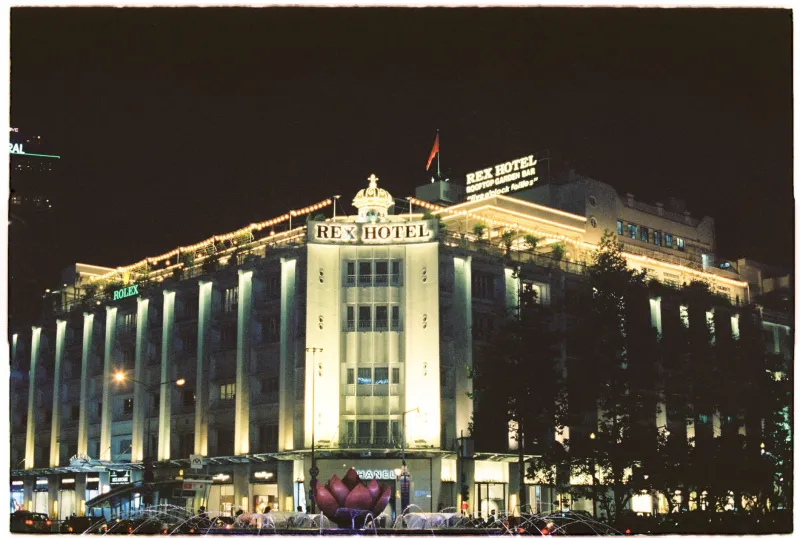
In the calculus of high-stakes business, most American executives invest considerable energy preparing what they will say inside a meeting room, a private dining suite, or an exclusive members' club. Far fewer direct equivalent attention to the moments immediately preceding entry — the curb approach, the door choreography, the precise beat between stepping out of a vehicle and crossing a threshold. In Ho Chi Minh City, where business relationships are forged through layered impressions and where status is read with uncommon acuity, those moments carry disproportionate weight.
The transition from a luxury limousine to a premier venue is not a passive interval. It is, for those who understand it, one of the most strategically loaded sequences in the entire business day.
Why the Transition Moment Carries Outsized Influence
Saigon's elite venues — from the private rooms of landmark hotels along Dong Khoi Street to the upper-floor suites of Bitexco Financial Tower — share a common characteristic: they maintain observant staff and reception personnel whose primary function is to assess and accommodate arriving guests. These individuals are trained to read arrival signals rapidly. The vehicle type, the manner of approach, the composure of the arriving party, and the professionalism of the supporting team all register before a single word is exchanged at the reception desk.
For US executives unaccustomed to this dimension of Vietnamese business culture, the revelation can be clarifying. Your counterpart's assistant, the venue's concierge, and occasionally the counterpart themselves may be positioned near a window or lobby vantage point as your car arrives. The visual narrative begins well before you extend your hand.
This is not a cultural peculiarity unique to Vietnam. Any veteran of high-level negotiations in New York, Chicago, or Los Angeles understands that optics precede substance. What differs in Ho Chi Minh City is the density of the observation — and the speed with which first impressions crystallize into durable judgments about reliability, seriousness, and executive stature.
The Curb Approach: Precision Over Proximity
The physical approach of a vehicle to a venue entrance is a variable that most travelers treat as incidental. Professional ground transportation services in Saigon's upper tier treat it as a deliberate act.
A properly executed curb approach positions the vehicle so that the passenger door aligns cleanly with the venue's primary entrance, minimizing the distance between exit and entry. This is not merely a matter of convenience. It signals logistical competence — the implicit communication that every element of your operation, including the people who support you, functions with precision. In a business culture where attention to detail is understood as a proxy for broader professional standards, this matters.
The angle of approach also determines sight lines. A vehicle that arrives at a shallow angle, drifts to an awkward stop, or requires repositioning creates visual noise. A clean, deliberate pull-up — executed without hesitation and without adjustment — registers as the movement of an organized principal who has command of his or her environment.
Experienced chauffeurs serving executive clients in Ho Chi Minh City anticipate venue-specific variables: the width of the drop-off lane at a particular hotel, the positioning of security personnel, whether a valet team will approach, and the optimal moment to decelerate so that the final stop feels effortless rather than reactive.
Timing the Exit: The Discipline of the Unhurried Moment
One of the most consistently underestimated elements of the arrival sequence is the pace of exit. American executives, conditioned by the urgency of packed schedules, often emerge from vehicles in a manner that communicates pressure — gathering items mid-movement, scanning for the entrance before both feet are on the ground, moving immediately toward the door without a settled pause.
In the context of Saigon's high-end business venues, this communicates the opposite of authority. It signals that external forces are dictating your pace.
The discipline of the unhurried exit — stepping out with composure, allowing your driver to manage any remaining logistics, taking a single deliberate moment to orient before advancing — reads as the behavior of someone who controls their schedule rather than someone controlled by it. This behavioral signal, though subtle, compounds with every other element of your arrival to form a coherent impression of executive presence.
A seasoned chauffeur service facilitates this discipline by ensuring that the transition requires nothing of the executive beyond the act of stepping out. Documents are managed. Bags are handled. The door is held at precisely the right moment. The executive is freed to perform the singular act of arriving well.
Driver Positioning and the Supporting Signal
Once a principal has exited the vehicle, the behavior of the driver and vehicle in the subsequent moments continues to communicate. A chauffeur who lingers awkwardly, who appears uncertain about departure timing, or who creates congestion at the drop-off point introduces visual clutter into what should be a clean sequence.
Conversely, a driver who maintains composed positioning — acknowledging the client's entry with a discreet nod, departing with efficiency, and coordinating seamlessly with venue staff — reinforces the impression of a well-organized operation. Venue personnel notice this. In Saigon's private club environment, where discretion and operational elegance are prized, a professional ground transportation team that behaves impeccably reflects favorably on the executive it serves.
This is a dimension of luxury ground transportation that extends well beyond the vehicle itself. The human element of the handoff — the interaction between chauffeur, venue staff, and the transitional space — is as carefully managed by elite services as any mechanical or logistical consideration.
Scenario: The Pre-Negotiation Arrival at a District 1 Private Club
Consider a US-based investment executive arriving for a late-afternoon meeting at one of Ho Chi Minh City's invitation-only business clubs in District 1. The counterpart — a senior Vietnamese industrialist — has a reputation for forming rapid assessments of prospective partners. His assistant has been positioned in the lobby since fifteen minutes before the scheduled meeting.
The executive's limousine arrives precisely at the agreed time. The approach to the entrance is clean and unhurried. The door opens, and the executive emerges without visible urgency — composed, appropriately dressed, carrying nothing that suggests disorganization. The chauffeur coordinates with the venue's door staff with quiet efficiency before departing. The executive pauses for a single moment at the entrance — not out of hesitation, but out of the kind of deliberateness that signals ownership of the moment — before proceeding inside.
By the time the executive reaches the reception desk, the assistant has already formed a positive preliminary impression. That impression shapes the tone of the introductory exchange, which shapes the opening of the meeting, which shapes the arc of the negotiation itself.
No single element of this sequence is individually decisive. Collectively, they are formidable.
Engineering the Sequence Before You Land
For US executives preparing for high-stakes engagements in Ho Chi Minh City, the arrival sequence is a variable that rewards advance planning. Communicating venue-specific details to your ground transportation provider — entrance protocols, valet arrangements, timing sensitivities — allows the chauffeur team to rehearse the approach and anticipate logistical variables before you arrive.
Elite limousine services operating in Saigon's corporate market maintain working knowledge of the city's premier venues precisely for this reason. The relationship between a professional chauffeur and a destination is not incidental. It is cultivated, updated, and applied in service of the executive's first impression.
In a city where business is conducted through a continuous accumulation of trust signals, the arrival sequence is among the earliest and most legible. Engineering it with the same rigor you bring to your pitch materials is not an indulgence. It is, by any reasonable measure, sound strategy.