The Invisible Erosion: How Cutting Corners on Ground Transportation Quietly Costs You Standing in Saigon's Business Community
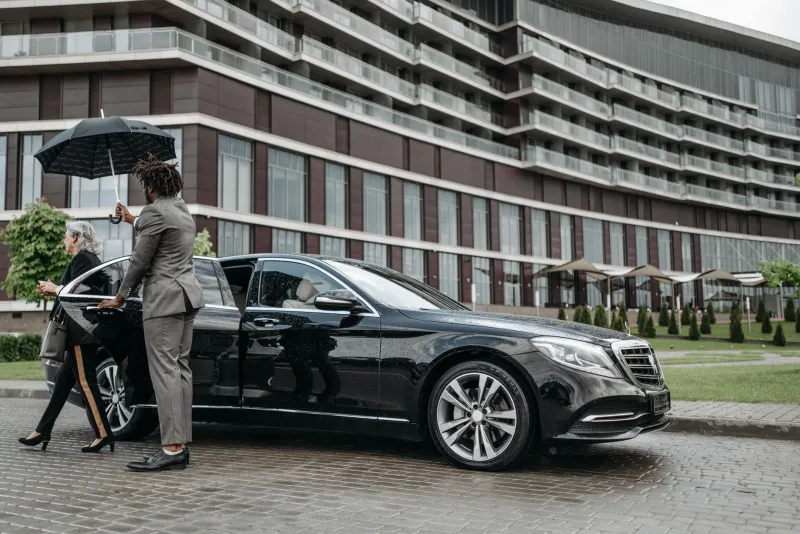
Let us begin with an uncomfortable proposition: some of the most consequential business decisions you make in Ho Chi Minh City will never appear on a budget report, a risk register, or a post-trip debrief. They will be made, instead, in the peripheral observations of Vietnamese business partners, in the quiet assessments of hotel concierges who report upward, in the institutional memory of a corporate culture that notices everything and records it in ways that no audit trail captures.
One of those decisions is how you get around the city.
The argument for economizing on ground transportation in Saigon is not without surface logic. Application-based ride-sharing platforms operate in the city. Standard car services exist. For a US executive accustomed to markets where these options are functionally equivalent to premium alternatives for most purposes, the calculation seems straightforward. The calculation is wrong.
How Saigon's Business Community Actually Processes Information
Ho Chi Minh City's corporate ecosystem—particularly at the level where significant deals are made—is smaller and more interconnected than it appears from the outside. Senior executives, legal advisors, hospitality managers, and intermediary consultants operate within networks where information about visiting foreign businesspeople circulates with surprising speed and specificity. The general manager of a district-five hotel knows the general manager of a Binh Thanh serviced apartment. The executive assistant at one firm has a professional relationship with the executive assistant at another.
Within these networks, observations about visiting executives are shared informally and persistently. They are not malicious. They are simply the natural byproduct of a relationship-centric business culture that evaluates trustworthiness and seriousness through accumulated behavioral data rather than through credentials and pitch decks alone. What this means in practice is that the car you arrived in for Tuesday's meeting may be a data point in a conversation you never hear, about a deal you did not realize was already being evaluated.
The Specific Signals That Mid-Tier Transportation Sends
It is worth being precise about what, exactly, a ride-sharing vehicle or a standard car service communicates in this context—because the damage is not monolithic. It arrives through several distinct channels.
Inconsistency is the first. Premium transportation in Saigon is characterized by a consistent standard: the same quality of vehicle, the same level of driver professionalism, the same punctuality and presentation across every engagement. When an executive's ground transportation varies—sometimes a well-appointed sedan, sometimes a platform vehicle that arrives with a cracked dashboard and a driver navigating by a phone propped against the steering wheel—it communicates the absence of a deliberate standard. And in a culture that reads deliberateness as respect, its absence is noted.
Unpredictability is the second. Application-based services in Ho Chi Minh City are subject to demand surges, driver cancellations, and routing inefficiencies that are entirely outside the user's control. For an executive with a fixed appointment, this is not merely inconvenient—it is a visible demonstration of inadequate preparation. Arriving late because your ride-share was cancelled communicates something specific: that you did not take the logistical demands of this market seriously enough to arrange reliable alternatives.
Impersonality is the third, and perhaps the most subtle. A professional chauffeur service operating at the elite level maintains a relationship with its clients. The driver knows your schedule, your preferences, the specific protocols of the venues you frequent. This continuity of service creates an experience that is, to any observer, unmistakably intentional. A platform service, by contrast, is anonymous by design—optimized for transaction volume rather than relationship quality. In a business culture that prizes relational investment, the difference between these two experiences is legible to anyone paying attention.
The False Economy in Precise Terms
The financial case for downgrading ground transportation typically rests on a straightforward comparison: the hourly or daily cost of a professional chauffeur service versus the per-ride cost of a platform alternative. On that narrow basis, the savings appear real. What the calculation omits is the cost of the perceptual damage accumulating on the other side of the ledger.
Consider a US executive on a four-day Saigon itinerary with three significant meetings—an initial partnership discussion, a due diligence session, and a closing dinner. The ground transportation savings across those four days, using platform services instead of elite chauffeur service, might amount to several hundred dollars. Against that, weigh the probability that at least one of those platform rides arrives late, presents unprofessionally, or generates a moment of visible discomfort that a counterpart observes and files away. Weigh the cumulative impression created across three arrivals at three high-stakes venues. Weigh the competitive position of a rival executive who made the opposite transportation decision and is being discussed in precisely those terms.
The false economy of mid-tier transportation is not merely that the savings are small relative to the stakes. It is that the savings are paid for with a currency—reputational capital—that is extraordinarily difficult to replenish once spent.
Recognizing When Your Transportation Strategy Is Working Against You
There are observable indicators that a ground transportation approach is creating reputational drag rather than supporting professional objectives. The most direct is a pattern of meetings that begin with an implicit need to re-establish credibility—where the opening minutes feel like recovery rather than momentum. This often reflects an arrival experience that created friction before the conversation began.
A subtler indicator is feedback from trusted local intermediaries or fixers who have visibility into how the visiting executive is being perceived. In many cases, these individuals will not volunteer the information directly. But questions about scheduling, about which venues were selected for subsequent meetings, about the warmth or formality of follow-up communications can reveal whether the initial impression landed where it needed to.
The most actionable indicator is simply self-awareness about the standard being communicated. An executive who would not wear a wrinkled suit to a Saigon boardroom, would not arrive without business cards, and would not conduct a meeting on a low-quality video call should apply the same standard of deliberateness to the vehicle they step out of. The logic is identical. The professional context demands a consistent level of presentation, and the ground transportation decision is an inseparable part of that presentation.
Repairing the Gap
For executives who have been operating in Saigon on mid-tier transportation and are now reassessing, the corrective is not complicated. It is a matter of establishing a consistent standard going forward and allowing that standard to speak for itself over time. Saigon's business community is observant, but it is also forgiving of executives who demonstrate an evolving understanding of local professional norms. The transition to elite ground transportation, maintained consistently across every engagement, will register.
What it will communicate, above all, is that you now understand the market well enough to know what it requires of you—and that you have chosen to meet that requirement without reservation. In a city where business relationships are built on the long accumulation of trust, that is precisely the message worth sending.