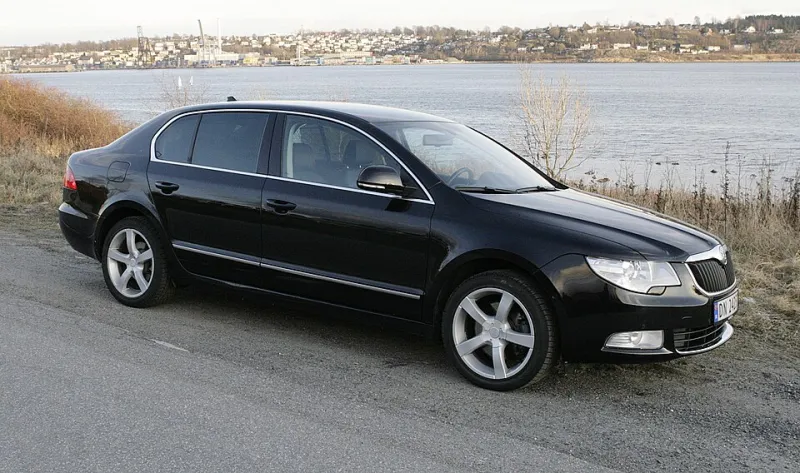
From Tarmac to Table: How Your Airport-to-Boardroom Transfer Shapes the Outcome of Every Saigon Negotiation
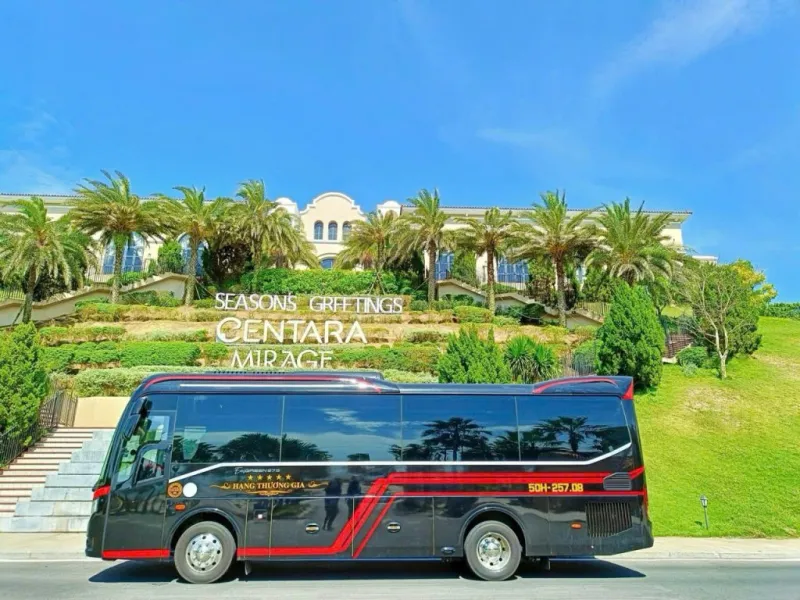
Photo: luxury limousine airport transfer business executive Vietnam, via saigonshuttle.com
There is a particular kind of exhaustion that descends on the seasoned business traveler—not the bone-deep fatigue of a red-eye, but the low-grade cognitive erosion that accumulates across seventeen time zones, two layovers, and the controlled chaos of an unfamiliar international terminal. By the time a US executive clears customs at Tan Son Nhat International Airport, the psychological deficit is already real. What happens in the next sixty minutes will either compound that deficit or begin to reverse it. That window—the transfer from airport to meeting venue—is, in the estimation of many experienced deal-makers, the single most consequential hour of any Saigon business trip.
The Neuroscience Behind the First Impression You Make on Yourself
Performance psychology has long recognized that cognitive resources are finite. The term "decision fatigue" entered the mainstream lexicon through studies on judges, physicians, and executives, all of whom demonstrate measurably poorer judgment as their mental reserves deplete throughout the day. For the transatlantic business traveler arriving in Ho Chi Minh City, that depletion begins well before the first handshake.
Research published by the American Psychological Association confirms that environmental stressors—noise, navigational uncertainty, physical discomfort—accelerate cognitive fatigue at rates disproportionate to their apparent severity. In practical terms, forty-five minutes of searching for an unmarked taxi, negotiating an unfamiliar fare structure, and enduring stop-and-go traffic without air conditioning does not merely inconvenience an executive. It measurably diminishes the prefrontal cortical function responsible for strategic reasoning, empathy calibration, and persuasive communication—the precise faculties required to close a high-stakes contract.
Professional ground transportation eliminates each of these stressors at the source. When a uniformed driver meets a traveler at the arrivals hall with a name placard and a pre-confirmed itinerary, the brain registers something that behavioral economists call a "certainty signal." Uncertainty—even minor uncertainty—consumes cognitive bandwidth. Certainty liberates it.
The Logistics of Confidence
Beyond neuroscience, there is the straightforward matter of time. Ho Chi Minh City's traffic is legendary among Southeast Asian capitals, and for good reason. District 1's arterial roads during morning rush hour can transform a ten-kilometer journey into a forty-five-minute ordeal for the uninitiated. For a traveler who has self-navigated using a ride-hailing application, that ordeal typically includes route uncertainty, communication barriers, and the ambient anxiety of wondering whether the driver actually knows where the meeting venue is located.
A professional limousine service eliminates this variable entirely. Experienced drivers employed by elite ground transportation companies in Saigon maintain real-time familiarity with traffic patterns, construction detours, and the subtle routing adjustments that separate a punctual arrival from an apologetic one. The executive arrives not merely on time, but composed—having used the transit window to review presentation materials, confirm meeting agendas, or simply decompress in climate-controlled silence.
This distinction matters more than it may initially appear. Vietnamese business culture places considerable emphasis on composure and deliberateness. Arriving flustered, perspiring, or visibly disoriented sends a signal that no amount of subsequent polish can fully correct. Arriving calm, punctual, and unhurried communicates exactly the opposite: that this is a person who commands their environment.
Case Studies: When the Transfer Becomes the Deal
The correlation between transfer quality and negotiation outcomes is not merely theoretical. Speaking with US executives who conduct regular business in Ho Chi Minh City reveals a consistent pattern.
A senior vice president at a Chicago-based manufacturing firm described a 2022 trip during which she had pre-arranged professional ground transportation for a critical supplier negotiation. Her counterpart—a Vietnamese logistics director with whom she had corresponded for months but never met in person—happened to be departing the same hotel as she arrived. "He watched me step out of the car, composed, with my materials organized," she recalled. "He told me later that it set a tone. He said it told him I was serious about the relationship."
A New York-based private equity partner offered a contrasting account from an earlier trip, before he had adopted a policy of pre-arranged transfers. Having spent forty minutes in a disagreement with a metered taxi driver over the route and an additional twenty minutes locating the correct building entrance in a district he did not know, he arrived at a term sheet meeting twelve minutes late and visibly unsettled. "I spent the first twenty minutes of that meeting mentally still in the taxi," he said. "We did not close that deal."
These accounts are anecdotal, but they reflect a structural reality: the psychological state in which a negotiator enters a room is not incidental to the outcome—it is foundational to it.
Precision Timing as a Competitive Instrument
Among the least-discussed advantages of professional ground transportation is its role in schedule optimization. An experienced limousine service operating in Ho Chi Minh City does not merely drive—it manages time on behalf of its client. Pre-trip consultations allow drivers to calculate departure windows with precision, accounting for airport transit time, security considerations, and the specific location of the destination within the city's complex district structure.
For the executive managing a multi-meeting day across Districts 1, 3, and 7—each with its own traffic logic—this time management function becomes indispensable. The vehicle becomes a mobile transition space: a place to debrief after one meeting and prepare for the next, rather than a stressful interlude that consumes the mental energy needed for both.
The Standard Your Competition Has Already Set
It is worth noting that multinational firms with established Saigon presences have largely standardized professional ground transportation as a non-negotiable component of executive travel protocol. The executive arriving via pre-arranged limousine is not displaying extravagance—they are meeting an expectation that the city's corporate culture has quietly institutionalized.
For the American business traveler making a first or early-stage visit to Ho Chi Minh City, adopting this standard is not merely a comfort consideration. It is a competitive alignment. The deal begins the moment the wheels touch the tarmac. The transfer determines whether it begins well.