The Reset Window: How Elite Transit Becomes Your Most Productive Asset Between Consecutive High-Stakes Meetings in Ho Chi Minh City
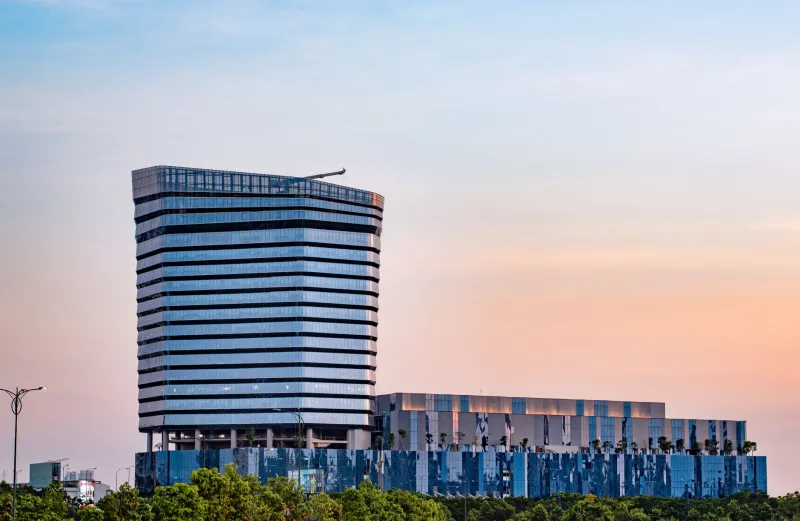
Saigon does not pause. From the moment you step outside a glass-tower boardroom in District 1 and into the city's relentless midday current — the horns, the heat, the compressed energy of eleven million people navigating the same square miles — your nervous system is processing stimuli at a rate that would challenge even the most seasoned international executive. For US business travelers accustomed to the relative predictability of New York or Chicago, the sensory intensity of Ho Chi Minh City between appointments can feel less like transit and more like a second negotiation.
This is precisely why the interval between your meetings is not downtime. It is, in fact, one of the most strategically significant windows of your entire itinerary.
The Neuroscience of Cognitive Depletion in a High-Density Urban Environment
Decision fatigue is well-documented in behavioral economics and executive performance research. What is less frequently discussed is how environmental overstimulation accelerates that fatigue. When an executive exits a demanding negotiation and immediately enters a chaotic urban environment — whether through a rideshare app, a taxi queue, or an impromptu walk — the brain receives no recovery signal. It continues processing at the same elevated pitch, consuming the same cognitive resources that will be required in the next meeting room.
The practical consequence is measurable. Executives who arrive at their second or third consecutive meeting without any genuine decompression interval tend to exhibit reduced flexibility in negotiation, slower processing of nuanced counteroffers, and a heightened susceptibility to anchoring bias — accepting an early figure or framing simply because the mental bandwidth required to challenge it has been partially exhausted.
Ho Chi Minh City, for all its commercial vitality and growing status as a Southeast Asian business hub, compounds this dynamic. The city's traffic density, acoustic environment, and thermal intensity are not incidental inconveniences. For an executive running back-to-back meetings across Districts 1, 3, and 7, they represent a genuine performance variable — one that can be managed or ignored, with corresponding consequences.
What a Luxury Transfer Actually Provides Between Appointments
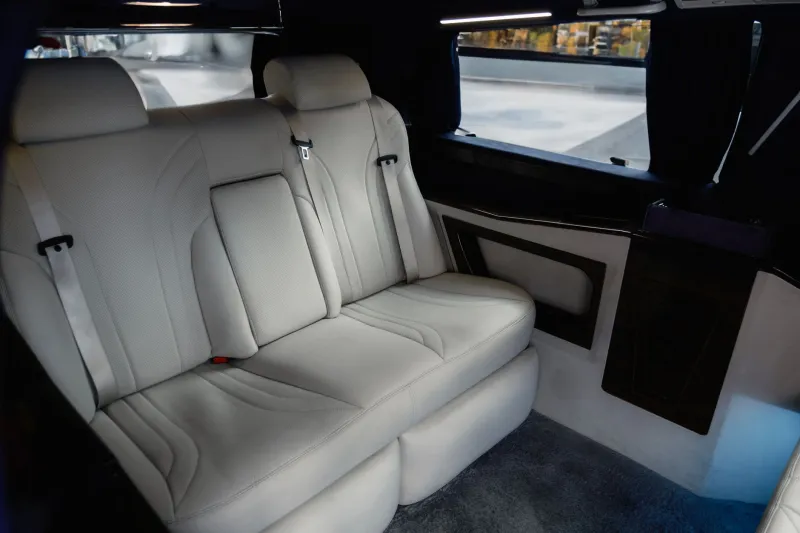
The value of an elite ground transfer in this context is not primarily logistical. It is environmental and psychological. When you enter a well-appointed, climate-controlled limousine after a demanding meeting, several things happen simultaneously that do not occur in any other transit scenario available in Saigon.
First, the acoustic environment shifts. The city's noise floor — which routinely exceeds levels that research associates with elevated cortisol — drops away. The cabin of a premium vehicle provides a degree of sound isolation that allows the parasympathetic nervous system to begin its recovery cycle. For executives who have spent ninety minutes in a high-stakes discussion, this shift is not merely comfortable. It is physiologically meaningful.
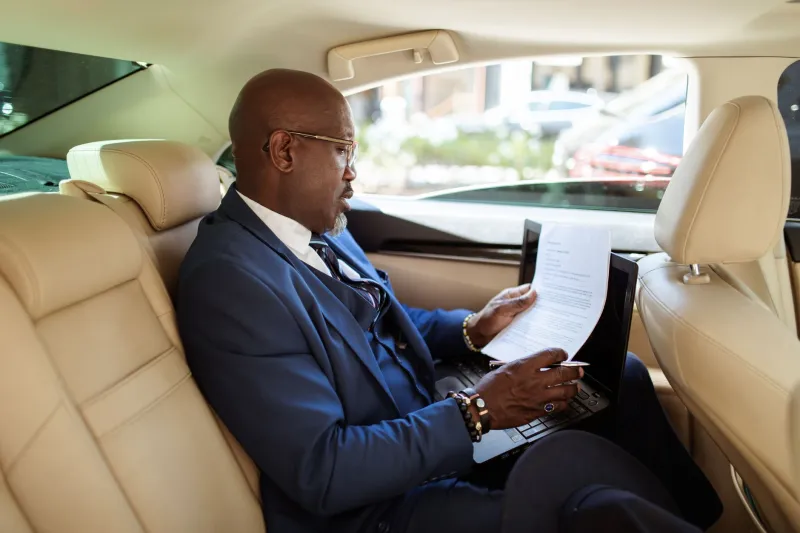
Second, the visual field narrows and stabilizes. Rather than navigating a sidewalk or processing the unpredictable flow of a busy street, the executive is seated, stationary relative to the interior, with a controlled sightline. This reduction in visual processing load frees working memory for the tasks that actually matter: reviewing the notes from the previous meeting, identifying the leverage points that emerged, and recalibrating the approach for the next engagement.
Third, and perhaps most importantly, there is privacy. The ability to speak aloud — to dictate a voice memo, to call a colleague in the US, to simply think through a problem without self-editing — is a luxury that no shared transit environment can replicate. The back seat of a Saigon Elite Rides vehicle is, in functional terms, a mobile private office. The driver is a professional who understands that discretion is part of the service.
Structuring Your Transit Time Deliberately
The executives who derive the greatest benefit from premium transfers between appointments do not simply use the time to decompress passively. They approach the window with the same intentionality they would bring to any other segment of a productive business day.
A practical framework might look like this: the first five minutes of any transfer are reserved for genuine mental release — no screens, no calls, simply allowing the body to register the change in environment. This is not indulgence; it is the brief physiological reset that makes everything that follows more effective. The subsequent portion of the journey is used for active review: what was agreed, what was left ambiguous, what the counterpart's body language suggested about their actual priorities. The final minutes before arrival are reserved for mental rehearsal of the opening of the next meeting — the framing, the tone, the specific outcome you are working toward.
This three-phase approach transforms a fifteen-minute transfer across central Saigon from a logistical necessity into a structured performance interval. It is the kind of deliberate preparation that separates executives who have good days in Ho Chi Minh City from those who have great ones.
The Cumulative Advantage Across a Full Business Day
Consider what this means across a full itinerary. A typical intensive business day in Ho Chi Minh City might involve three or four distinct meetings, spread across different districts, separated by transfers of fifteen to forty-five minutes each. For an executive using conventional transit — rideshares with variable reliability, taxis with uncertain air conditioning, or the genuine hazard of attempting to walk between appointments in the wet season — each of those intervals is a drain. The stimulation accumulates. The cognitive resources available for the final meeting of the day are a fraction of what was available for the first.
For an executive traveling with Saigon Elite Rides, each of those intervals is instead a partial restoration. The cumulative effect by the end of the day is not trivial. Sharper recall of earlier discussions. Greater patience with a counterpart's negotiating rhythm. The capacity to recognize and respond to a late-day concession rather than simply moving to close because mental fatigue has shortened the horizon.
In a business culture where relationships are built over time and where Vietnamese counterparts are often extraordinarily skilled at reading the energy and attentiveness of the person across the table, arriving at your fourth meeting of the day with the same presence you brought to your first is a competitive differentiator of genuine consequence.
The Infrastructure of Peak Performance
US executives who travel frequently to competitive markets — whether Singapore, Tokyo, or São Paulo — understand that peak performance abroad is not accidental. It is the product of deliberate choices about sleep, preparation, and the management of environmental variables. Ground transportation is one of those variables, and in a city as demanding as Ho Chi Minh City, it is one of the more consequential ones.
The silence between your meetings is not empty time. It is, if properly resourced, the interval in which your next negotiation is quietly won.