Gridlock and the Executive Mind: The Cognitive Price Saigon's Traffic Extracts from Every Unprepared Business Traveler
There is a particular kind of exhaustion that arrives before the meeting has even begun. You have crossed twelve time zones, cleared customs, navigated the controlled chaos of Tan Son Nhat International Airport, and then entered the streets of Ho Chi Minh City during peak traffic hours. By the time you reach your destination, something has already been spent. You may not be able to name it precisely, but your counterparts across the table will recognize it. It shows in the quality of your attention, the speed of your responses, the confidence of your positions.
What has been spent is cognitive capacity—and Saigon's traffic extracted it with remarkable efficiency.
The Neuroscience of Environmental Stress
Decades of research in cognitive psychology and stress physiology have established a clear relationship between environmental stressors and executive brain function. The prefrontal cortex—the region responsible for judgment, planning, impulse regulation, and complex decision-making—is acutely sensitive to cortisol, the primary stress hormone. When cortisol levels rise in response to perceived threat or uncontrollable environmental chaos, prefrontal functioning measurably degrades.
The implications for negotiating performance are direct. Under elevated stress, individuals become more reactive and less deliberate. They anchor more heavily to initial positions, struggle to integrate new information fluidly, and are more susceptible to cognitive shortcuts that can lead to poor evaluations of risk and opportunity. In short: stress makes you a worse negotiator, a less creative problem-solver, and a more predictable opponent.
Ho Chi Minh City's traffic does not need to be dangerous to produce this effect. It needs only to be unpredictable, uncontrollable, and demanding of sustained vigilance—which, by virtually any objective measure, it is.
What Saigon's Streets Actually Ask of Your Brain
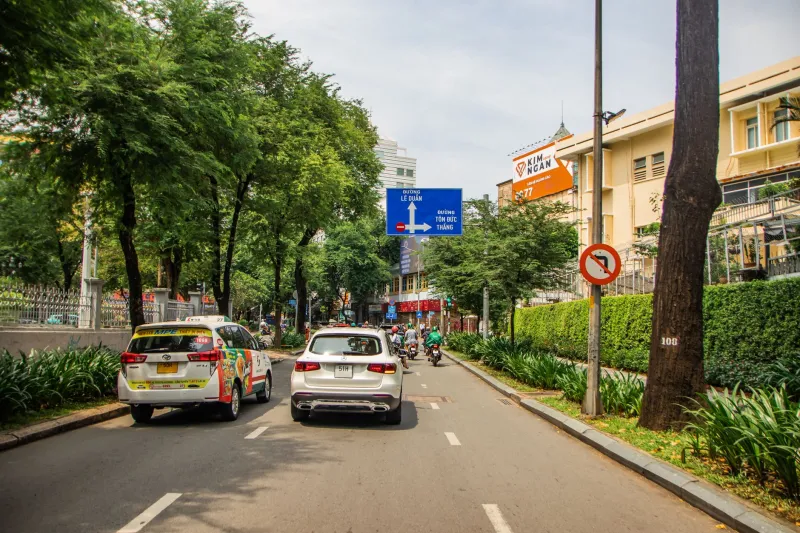
With approximately nine million registered motorbikes weaving through an urban grid that was not designed to accommodate them, Ho Chi Minh City presents a sensory and cognitive environment unlike anything most US executives have encountered. Intersections operate on informal negotiation rather than traffic law enforcement. Lanes are advisory. Pedestrian crossings require active assertion. The ambient noise level—horns, engines, street vendors, construction—creates a sustained auditory load that the nervous system cannot simply tune out.
For a passenger in a standard vehicle, even without actively driving, this environment demands constant low-level threat monitoring. The brain scans the periphery, anticipates sudden lane changes, registers near-misses, and maintains a background state of readiness that is physiologically indistinguishable from mild but persistent stress. Over a thirty-minute ride, this accumulates. Over multiple rides across a full day of meetings, the cumulative cognitive depletion becomes significant.
Research on decision fatigue—the well-documented phenomenon in which decision quality declines as the number of decisions made increases throughout a day—suggests that even the micro-decisions involved in passive traffic navigation consume the same finite reservoir of cognitive resources that executives rely on for high-stakes professional judgment. You are spending mental capital before you have had the opportunity to deploy it.
The Compounding Effect Across a Multi-Day Itinerary
A single compromised ride might be recoverable. An executive with adequate preparation time, a quiet hotel room, and a reasonable schedule may absorb one stressful transit and still arrive at peak performance. But the reality of most Saigon business trips is a compressed itinerary across multiple days, with back-to-back meetings, formal dinners, site visits, and social engagements that leave minimal recovery windows.
Under these conditions, the compounding effect of repeated stressful transit experiences becomes a genuine strategic liability. Each ride that depletes rather than restores cognitive reserves narrows the margin for peak performance. By the third day of a demanding itinerary, an executive who has been navigating Saigon's streets in unpredictable, unmanaged transportation is operating at a measurably different level than one who has been able to use every transit interval as a period of restoration, preparation, or focused work.
This is the hidden arithmetic of ground transportation decisions. The cost is not paid at the point of booking. It is paid across the boardroom table, in the quality of every judgment made during the hours that follow.
The Professional Driver as Cognitive Infrastructure
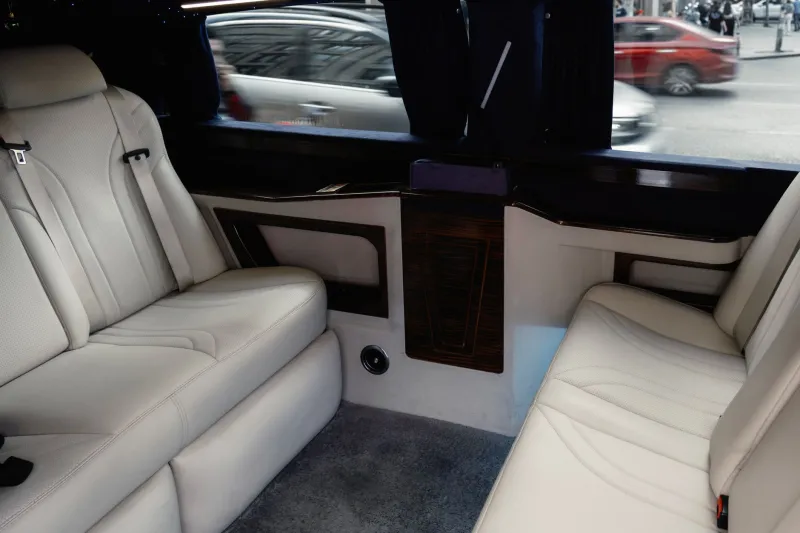
When an executive delegates the challenge of Saigon's traffic to a trained, experienced professional chauffeur, the transaction is not merely logistical. It is neurological. The removal of uncontrollable environmental stressors from the executive's sensory field—replaced by a climate-controlled, acoustically managed, professionally maintained cabin—creates the conditions for genuine cognitive recovery between engagements.
A luxury vehicle with a knowledgeable driver navigating the most efficient route, anticipating delays, and managing the complexity of the city's road network on behalf of the passenger converts what would otherwise be a stress-generating interval into a productive or restorative one. The executive can review briefing materials, conduct a preparatory call, engage in focused reflection, or simply allow the nervous system to return to baseline before the next high-stakes encounter.
This is not a comfort preference. It is a performance protocol.
Measuring the Return on a Transportation Decision
US executives are accustomed to evaluating business investments in terms of measurable return. The return on elite ground transportation in Ho Chi Minh City is, in principle, calculable—though the inputs require honest self-assessment. Consider the value of the deals on your Saigon itinerary. Consider the marginal difference in negotiating outcome that a fully resourced, cognitively sharp executive achieves versus one operating at eighty percent capacity. Consider the cost of a single concession made from a position of fatigue rather than clarity.
Against those figures, the investment in professional chauffeur service is not a line item in the amenities budget. It is a risk management decision—one that protects the cognitive infrastructure on which every other professional investment in the trip depends.
Saigon's traffic will not become more predictable. The cognitive demands of the city's streets will not diminish. What can change is whether those demands fall on you or on a professional equipped to absorb them on your behalf. That choice, made before you land, may be the most consequential strategic decision of your entire trip.