What No NDA Can Protect: The Hidden Privacy Architecture of Elite Limousine Service in Ho Chi Minh City
Every seasoned US executive traveling to Ho Chi Minh City arrives with a briefcase full of legal instruments. Non-disclosure agreements, mutual confidentiality clauses, intellectual property riders — the paper trail of modern deal-making is formidable. And yet, for all the protection those documents appear to offer, they share a critical limitation: they respond to breaches rather than prevent them. By the time an NDA becomes relevant, the damage is already done.
The question that rarely gets asked in pre-trip planning meetings is this: where, precisely, is sensitive information most vulnerable during a Saigon business trip? The answer, more often than executives care to admit, is inside a vehicle.
The Overlooked Exposure Point
Consider the typical cadence of a high-stakes visit to Ho Chi Minh City. An executive lands at Tan Son Nhat International Airport after a fifteen-hour flight from the US, clears customs, and reaches for a ride-sharing app out of habit. Within minutes, a stranger is navigating through District 1 traffic while the executive — fatigued, jet-lagged, and instinctively reverting to familiar routines — begins working through the day's agenda on a phone call.
That stranger, of course, has ears.
This is not a hypothetical. Competitive intelligence professionals and corporate investigators have long understood that informal transit environments represent one of the most consistently underprotected information channels in business travel. Drivers who operate through mass-market platforms are vetted only to the standards required for app approval — which is to say, minimally. There is no institutional confidentiality obligation, no professional code of silence, and no meaningful mechanism for accountability if a conversation overheard in a backseat finds its way to the wrong party.
In a city like Ho Chi Minh City, where business networks are dense, relationships are deeply interconnected, and information travels with remarkable speed, the stakes of that exposure are considerably higher than they might be elsewhere.
What Elite Drivers Actually Know — and Why That Matters
A professional limousine driver employed by a premium transportation service in Saigon occupies a uniquely informed position. Over the course of a career serving C-suite executives, deal teams, and senior government officials, a seasoned driver accumulates an extraordinary amount of contextual knowledge: which companies are in active negotiations, which executives are in town and for how long, which relationships are strained, and which deals are close to closing.
This is not incidental. It is the natural byproduct of proximity to power.
The critical variable is not what a driver knows — it is what a driver does with that knowledge. At Saigon Elite Rides, the distinction is structural rather than aspirational. Drivers undergo rigorous vetting that extends well beyond a background check. Confidentiality expectations are embedded in employment agreements, reinforced through ongoing professional standards, and treated as a core competency rather than a peripheral courtesy. The culture of discretion is institutional.
This means that when a managing director from a Chicago-based private equity firm needs to rehearse a sensitive acquisition pitch during the forty-minute drive from the airport to the Reverie Saigon, the conversation stays in the cabin. Not because a contract says it must, but because the professional on the other side of the partition has been selected, trained, and retained precisely for that quality.
The Anatomy of a Preventable Breach
It is instructive to examine the kinds of situations that create real exposure during business travel in Ho Chi Minh City.
A common scenario: two members of a deal team share a ride-share vehicle from their hotel in District 3 to a counterpart's office in Phu My Hung. En route, they discuss their walk-away position — the number below which they will not go. The driver, who speaks more English than his demeanor suggests, registers the figure. That evening, through a contact in the counterpart's organization, the information surfaces. The negotiation that follows is no longer balanced.
Another scenario: a senior executive, traveling alone, takes a call in the backseat of an unvetted vehicle. The call involves a personnel decision — a restructuring that has not yet been announced publicly. The driver, a freelancer who supplements his income through informal consulting relationships with local business brokers, connects the dots. By the time the executive arrives at his destination, the information is already moving.
No NDA signed by the executive's counterparts offers any protection in either case. The breach does not originate with a party to the agreement. It originates in the vehicle.
The Architecture of Real Privacy
What distinguishes a genuinely private transit environment from a merely comfortable one is a combination of human and structural factors.
On the human side, the driver's professional identity must be bound to confidentiality in a meaningful, enforceable way. This requires institutional commitment — not the goodwill of an individual contractor who may have competing incentives.
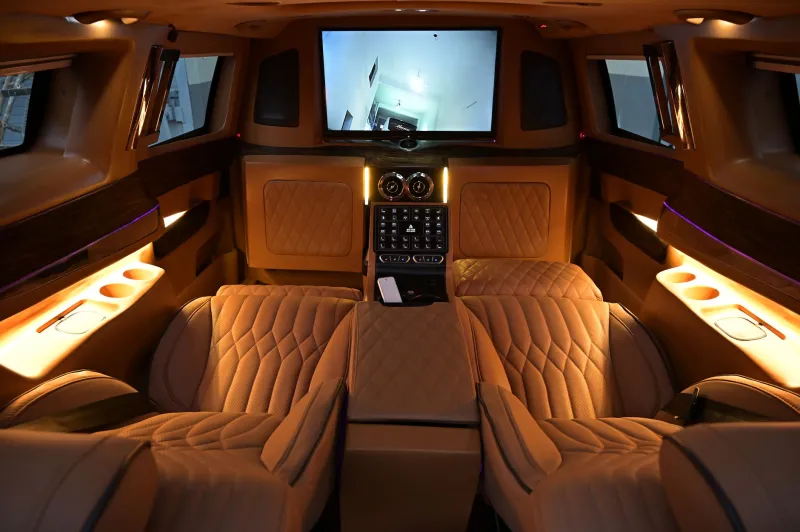
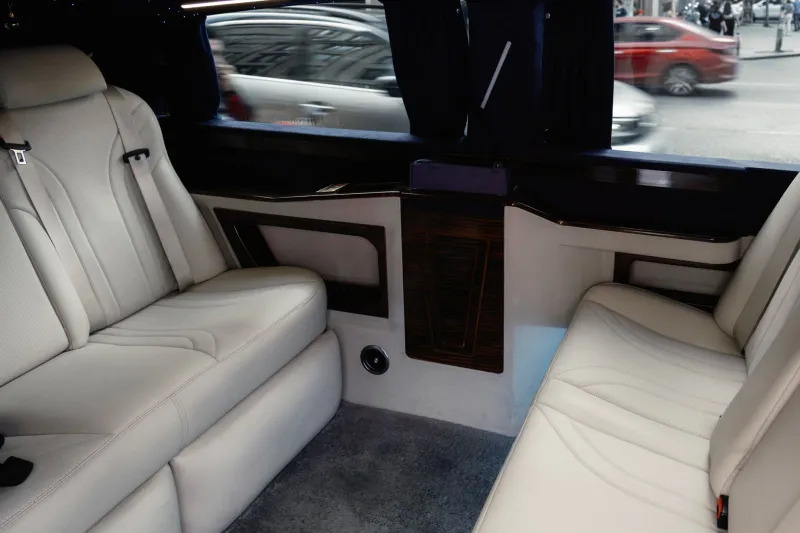
On the structural side, the vehicle itself matters. A properly appointed luxury cabin — with a partition, controlled acoustics, and adequate separation between passenger and driver — creates a physical environment that supports candid conversation. The executive who needs to brief a colleague or process a difficult call aloud does not have to self-censor simply because another person is present in the front seat.
Saigon Elite Rides builds both dimensions into its service model. The fleet is selected for cabin quality. The driver corps is selected for professional character. The combination produces something that no legal document can replicate: an environment where sensitive information simply does not escape.
Rethinking the Pre-Trip Security Checklist
US executives who travel frequently to Southeast Asia often invest considerable resources in cybersecurity protocols for international trips. Encrypted devices, VPN configurations, and data minimization practices are standard recommendations from corporate security teams. These are sensible precautions.
But the same executives who lock down their laptops before boarding a flight to Ho Chi Minh City will frequently step into an anonymous ride-share vehicle and conduct sensitive business conversations without a second thought. The asymmetry is striking — and costly.
Ground transportation deserves a place on the pre-trip security checklist. Not because the risk is exotic or theoretical, but because it is mundane and recurring. Every transfer between airport and hotel, hotel and meeting, meeting and dinner represents an opportunity for information to travel in directions it should not.
The most effective protection against that risk is not a contract. It is a driver who has been selected, trained, and professionally committed to ensuring that what is said in the cabin remains there.
A Different Kind of Investment
In the calculus of a major business trip to Ho Chi Minh City, the cost of premium ground transportation is a rounding error relative to the value of the transactions being pursued. A single deal that closes because sensitive positioning information remained confidential will justify years of transportation upgrades.
More to the point, the investment is not merely financial. It is an investment in professional discipline — the recognition that serious business requires serious infrastructure, and that infrastructure includes the vehicle you choose and the driver behind the wheel.
An NDA is a remedy. A vetted driver is a safeguard. In Saigon's corporate arena, the distinction between the two may be the most consequential one you make before your first meeting begins.