What Your Nervous System Costs You: The Measurable Business Case for Stress-Free Transit in Ho Chi Minh City
There is a number your CFO has never put in a spreadsheet, yet it influences every deal you negotiate abroad. It is not a line item for airfare, hotel accommodations, or even professional advisory fees. It is the physiological cost of arriving at a critical meeting in a compromised mental state — and in Ho Chi Minh City, where traffic density, sensory intensity, and schedule pressure converge simultaneously, that cost is far higher than most American executives anticipate.
The question worth asking before your next Saigon engagement is not merely how you will get from one appointment to the next. It is what condition you will be in when you arrive.
The Neuroscience Behind the Numbers
Cortisol — the hormone the human body releases in response to stress — does not discriminate between a genuine physical threat and a chaotic ride through District 1 at rush hour. When cortisol levels spike, the prefrontal cortex, the region of the brain responsible for complex reasoning, risk assessment, and impulse control, becomes measurably less effective. This is not a metaphor. It is documented neurological reality.
A body of research published across institutions including Harvard Medical School and the American Psychological Association confirms that even moderate stress responses degrade working memory, reduce the capacity for creative problem-solving, and increase the likelihood of reactive rather than strategic decision-making. For an executive preparing to negotiate a multi-million-dollar partnership or close a supply chain agreement in a foreign market, these are not abstract academic findings. They are variables with direct revenue implications.
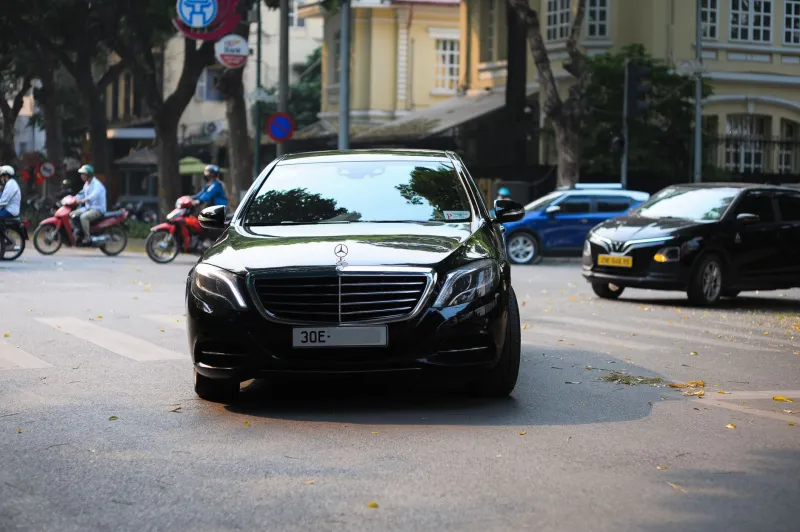
Ho Chi Minh City's street environment is, by any objective measure, one of the most stimulating urban landscapes in Southeast Asia. The density of motorbikes, the ambient noise, the unpredictability of local traffic patterns — all of these factors are processed by the nervous system as low-grade stressors. Accumulated across a 45-minute transfer in a standard vehicle, they constitute a meaningful cognitive tax paid before a single word of negotiation has been spoken.
The Controlled Environment as Competitive Infrastructure
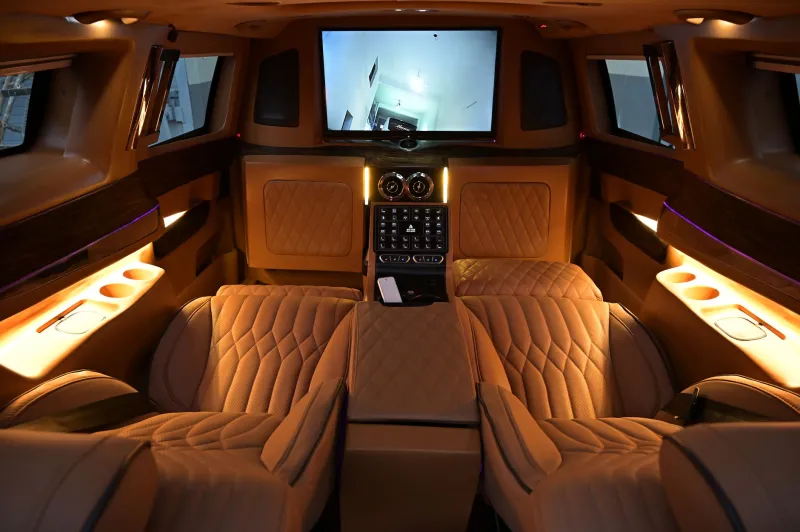
Elite ground transportation, properly understood, is not a comfort preference. It is a form of cognitive infrastructure.
A premium cabin engineered for acoustic isolation removes the primary source of urban stress stimulation: noise. Research on noise pollution and cognitive performance consistently demonstrates that sound-controlled environments preserve attentional resources that would otherwise be consumed by involuntary sensory processing. In practical terms, a quiet cabin means arriving with more mental bandwidth available for the work that actually matters.
Temperature regulation plays an equally significant role. The hypothalamus, which governs both thermoregulation and emotional response, functions more efficiently within a narrow comfort range. A climate-controlled interior — maintained at a consistent, occupant-preferred temperature — supports the kind of measured, emotionally regulated state that experienced negotiators recognize as essential to their performance.
Add to this the stability of a professional, experienced driver who navigates Saigon's roads with deliberate efficiency, and the controlled environment becomes a genuine preparation chamber rather than a passive waiting period.
Case Patterns: When Transit Quality Changed the Outcome
While individual business negotiations are rarely disclosed publicly, patterns emerge from the experiences of US executives who have operated extensively in Southeast Asian markets.
Consider the profile of a senior director from a Chicago-based logistics firm who made three separate trips to Ho Chi Minh City over 18 months. On the first two visits, ground transportation was arranged through a standard ride-sharing application. Both trips involved last-minute vehicle substitutions, drivers unfamiliar with specific commercial addresses, and one instance of a vehicle breakdown en route to a supplier meeting. The director arrived to each engagement visibly unsettled, and by his own subsequent account, made concessions in the opening stages of negotiation that he would not have made under calmer circumstances.
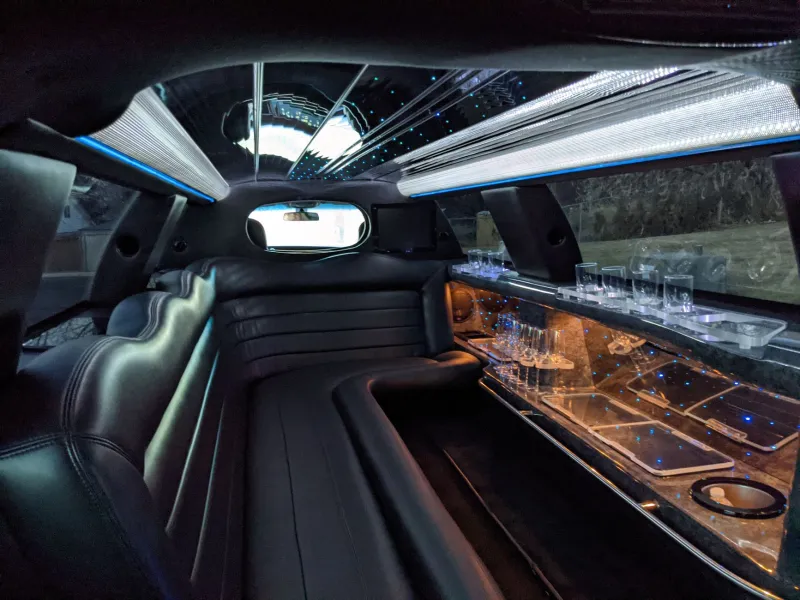
On the third visit, a dedicated limousine transfer was arranged for every inter-district movement. The vehicles arrived punctually. The cabins were quiet. The drivers were briefed on destinations in advance. The director used each transfer to review materials, organize his priorities, and — critically — simply decompress between sessions. The third trip produced two signed agreements that the previous visits had failed to advance.
The variable that changed was not the director's expertise, the terms on offer, or the counterpart across the table. It was the neurological state he brought into each room.
Reframing the Expense: ROI Over Optics
The resistance many American business travelers feel toward premium ground transportation is cultural as much as financial. There is a deeply ingrained corporate instinct to minimize visible expense, to default to the most economical option, to treat anything that looks like luxury as a justification problem waiting to happen.
This instinct, however well-intentioned, applies a domestic cost-benefit framework to an environment where the variables are fundamentally different. In a city where navigating the gap between the airport and a boardroom can consume more cognitive energy than the meeting itself, the economical option is frequently the costly one.
The calculation is straightforward when framed correctly. If a premium transfer costs a measurable amount more than a ride-share alternative, but that transfer preserves the mental acuity required to hold a negotiating position, avoid a premature concession, or project the composure that signals credibility to a Vietnamese counterpart — the ROI is not a matter of opinion. It is arithmetic.
Building the Protocol: Stress Management as Standard Operating Procedure
For US executives who travel to Ho Chi Minh City with any regularity, the most effective approach treats transit quality not as a situational upgrade but as a standing operational standard.
This means pre-scheduling all ground transfers before departure from the United States, ensuring that no appointment begins with the uncertainty of sourcing a vehicle in real time. It means selecting a service that provides consistent vehicle quality, vetted drivers, and the kind of route familiarity that eliminates navigational stress entirely.
It also means using the transfer window intentionally. Elite transit creates time that is genuinely available — not spent managing a driver, tracking an app, or bracing against an erratic ride. That time can be allocated to structured preparation, to a brief mindfulness practice, or simply to the restorative quiet that restores the cognitive baseline required for peak performance.
In Ho Chi Minh City's commercial arena, where relationships are built on perceived competence and composed authority, arriving in control of your own mental state is not a soft advantage. It is a strategic one — and like all strategic assets, it carries a measurable return.
The currency of calm is real. The question is whether you are investing in it.