The Quiet Room on Wheels: How Strategic Silence Inside a Luxury Limousine Wins More Deals Than Any Boardroom Monologue
There is a particular kind of pressure that accompanies every significant business engagement in Ho Chi Minh City. The city moves fast — its streets dense with motion, its commercial districts humming with ambition — and the executives who navigate it most effectively are rarely those who speak the most. They are, almost universally, those who think the clearest.
Clarity, however, is not a product of noise. It is a product of space. And in one of Southeast Asia's most dynamic business capitals, genuine cognitive space is extraordinarily difficult to find — unless you know precisely where to look.
For a growing number of senior executives traveling through Saigon, that space is found not in a private office or a hotel suite, but inside the sealed, climate-controlled interior of a luxury limousine moving quietly through the city. What happens in that cabin — or more precisely, what doesn't happen — is increasingly recognized as a decisive factor in high-level deal-making.
The Myth of the Productive Meeting Room
American business culture has long lionized the conference room as the sacred ground of deal-making. Whiteboards, presentation decks, catered lunches, formal agendas — these are the rituals of professional engagement that executives are trained to perform. And yet, experienced negotiators will often admit, in candid moments, that the most consequential decisions in any significant transaction are rarely made in those rooms.
They are made before. Or after. In the margins.
The formal setting introduces performance pressure. Every word carries the weight of an audience. Every pause is interpreted. Every concession is catalogued. What the conference room demands is a polished, defensible version of your thinking — not necessarily your most honest assessment of a situation.
The limousine, by contrast, demands nothing. It simply carries you forward.
Psychological Safety and the Architecture of Candor
Behavioral researchers have long understood that the physical environment shapes the quality of thinking that occurs within it. Open-plan offices, for all their collaborative appeal, are demonstrably poor environments for deep strategic reasoning. The constant low-level social monitoring — the awareness of being seen and potentially overheard — activates a layer of cognitive self-censorship that narrows the range of ideas a person is willing to entertain.
A luxury vehicle in transit eliminates that dynamic almost entirely.
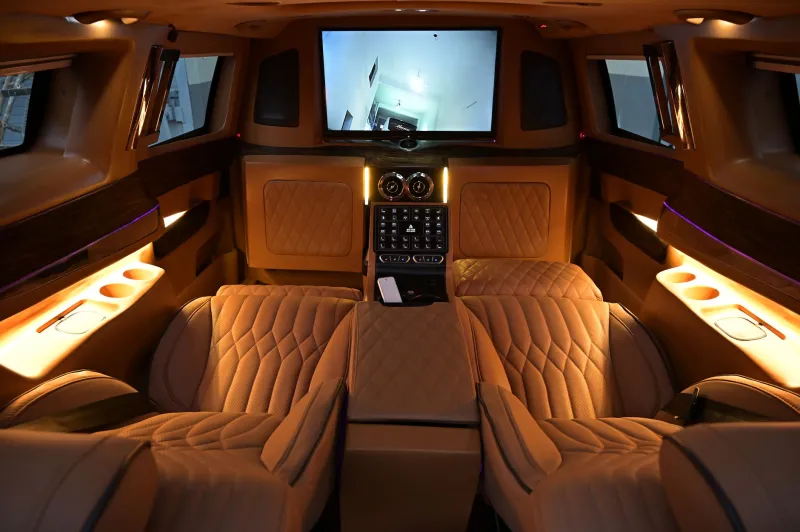
The tinted windows create visual separation from the outside world. The acoustic insulation muffles the ambient noise of a city that never quite quiets. The professional driver, bound by a culture of absolute discretion, functions as a neutral presence rather than an audience. What remains is something increasingly rare in modern professional life: an environment where a senior executive can think out loud without consequence.
In Ho Chi Minh City's corporate arena, where business relationships are deeply relational and where a misplaced word in the wrong context can close doors for months, this kind of protected space carries real strategic value.
The Pre-Meeting Ritual That Changes Everything
Consider the typical morning of a US executive engaged in multi-day negotiations in Saigon. The hotel lobby is populated with colleagues, counterparts, and the ambient uncertainty of who might be listening. The elevator is shared. The breakfast table is public. By the time formal discussions begin, the executive has already been performing — managing impressions, filtering language, projecting composure — for the better part of an hour.
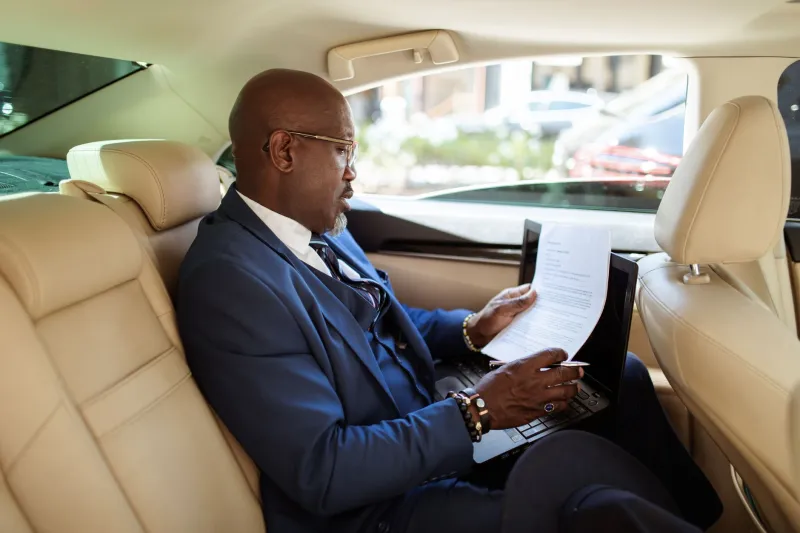
Now consider an alternative. The same executive steps into a private luxury vehicle, the door closes, and for the duration of the transfer — whether across the district or across the city — there is no audience to manage.
In that interval, the executive can do something that the morning's social performance has prevented: think honestly about what they actually want from the day's meetings, what they are genuinely willing to concede, and where the other party's pressure points may lie. They can speak those thoughts aloud, test them against their own reasoning, revise them without embarrassment.
This is not idle reflection. This is the strategic rehearsal that separates executives who arrive at negotiations reactive from those who arrive prepared.
What You Choose Not to Say Is a Negotiating Asset
There is a counterintuitive principle at work here that experienced dealmakers understand instinctively: the discipline of not discussing certain things in the wrong settings is itself a form of competitive advantage.
In Ho Chi Minh City, where business relationships are cultivated across restaurants, rooftop bars, and social gatherings, the temptation to fill every silence with conversation is significant. Vietnamese business culture values warmth and rapport, and American executives — accustomed to demonstrating engagement through verbal participation — can easily over-share in informal settings without realizing they have done so.
The limousine provides a structured opportunity to practice the opposite discipline. Before a dinner engagement or a closing meeting, the transit window becomes a space to consciously decide what will not be said — which concerns will remain unvoiced, which positions will stay unexpressed until the right moment, which questions will be held in reserve.
This kind of deliberate restraint is not passivity. It is precision. And it is far easier to execute when you have had the quiet to prepare it.
The Post-Meeting Debrief No One Else Hears
The value of the limousine's confidential environment extends beyond preparation. It is equally significant in the hours that follow a high-stakes engagement.
Immediately after a major meeting, the most honest and useful analysis of what transpired exists for only a brief window before the mind begins to rationalize, reframe, and reconstruct. In that window, the unfiltered debrief — the kind where an executive says plainly what they observed, what concerned them, and what they believe the other party actually wants — is immensely valuable.
That debrief cannot happen in a hotel lobby. It cannot happen over a shared dinner. It cannot happen anywhere that carries social or professional risk.
It can happen in a luxury limousine, with a trusted driver at the wheel and the city of Saigon moving silently past the windows.
Infrastructure for Decision-Making, Not Just Transportation
The most sophisticated business travelers in Ho Chi Minh City have long since stopped thinking about ground transportation purely in logistical terms. The question is no longer simply how to move from one location to another; it is how to arrive at each engagement in the optimal cognitive and strategic state.
Elite ground transportation, in this context, is not a convenience. It is infrastructure — as essential to the executive's performance as the quality of their legal counsel or the preparation of their financial models.
Saigon Elite Rides exists precisely at this intersection of mobility and strategy. The vehicles are engineered for comfort and acoustic privacy. The drivers are selected for professionalism and discretion. The service is designed to ensure that every transfer, regardless of distance, functions as a protected interval in which the executive's thinking can remain entirely their own.
In a city where information moves quickly and competitive intelligence is perpetually in play, the ability to think without being observed is not a luxury. It is a genuine edge.
And sometimes, the most powerful thing you can do in a negotiation is say absolutely nothing — until you are ready.